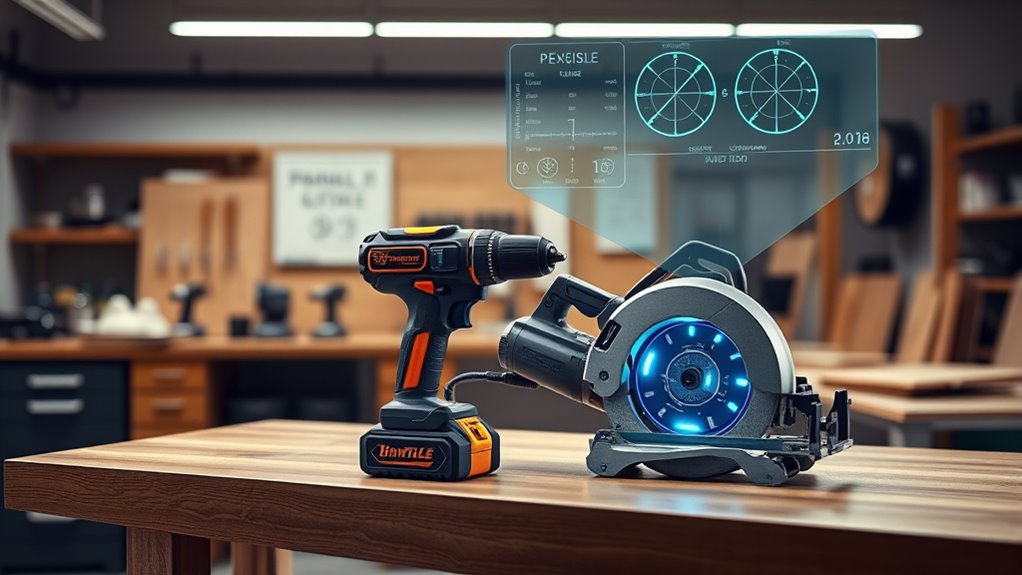

Advancements in battery technology and ergonomic designs have transformed power tools, making DIY projects safer, easier, and more efficient. Cordless options now let you move freely and work longer without interruptions, thanks to powerful rechargeable batteries. Ergonomic features, like softer grips and balanced weight, reduce fatigue and increase accuracy. These innovations streamline your work, improve safety, and let you complete tasks faster. Keep exploring to discover how these tech changes continue to shape the future of DIY gear.
Key Takeaways
- Power tools have transitioned from manual to powered devices, increasing efficiency and safety in DIY projects.
- Cordless technology allows greater mobility and longer work periods without reliance on power outlets.
- Advances in battery technology enable longer-lasting charges, lighter tools, and faster setup times.
- Ergonomic designs improve comfort, control, and safety, reducing user fatigue and enhancing work accuracy.
- Technological innovations continue to refine power tools, making DIY gear more efficient, versatile, and user-friendly.
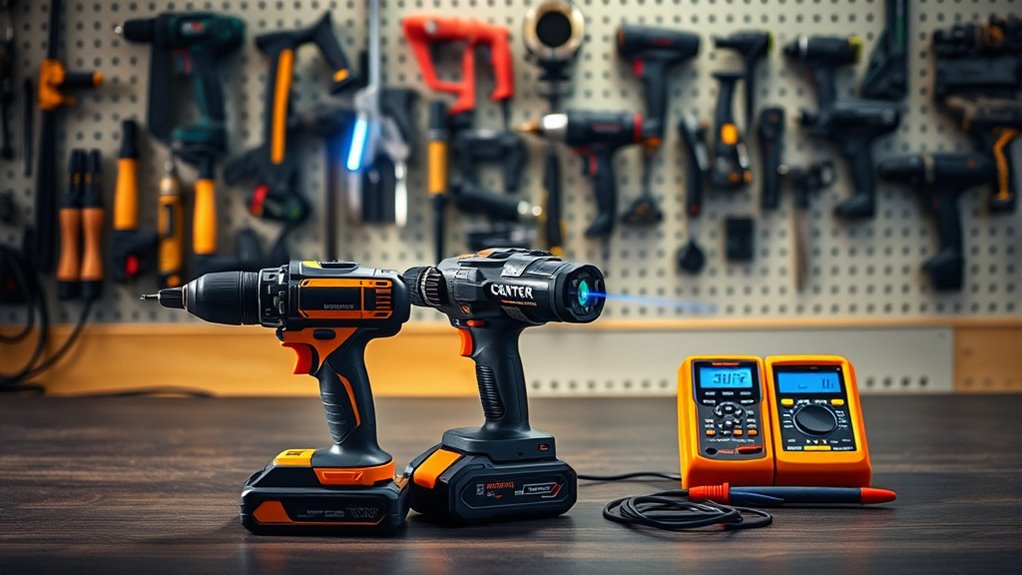
Power tools have come a long way from their manual predecessors, transforming the way you work on projects. Today’s advancements in technology have made tools more efficient, safer, and easier to handle. One of the most significant changes is the rise of cordless innovations, which have completely reshaped how you approach DIY tasks. No longer are you tethered to a power outlet; now, you can move freely around your workspace or job site without worrying about cords getting tangled or limiting your reach. Cordless power tools, powered by rechargeable batteries, offer incredible convenience, allowing you to work longer without interruption and reducing the hassle of cords and extension cords.
These cordless innovations have improved rapidly over the years. Modern batteries pack more power and hold their charge longer, so you won’t find yourself running out of juice midway through a project. Plus, advancements in battery technology have decreased the weight of these tools, making them easier to handle for extended periods. This means you can work more comfortably, with less fatigue, and focus more on your task rather than battling the weight or dealing with cord management. The convenience of cordless tools also translates to faster setup times and a cleaner workspace, since you don’t need to manage a tangle of cords or worry about tripping hazards. Additionally, improvements in ergonomic design ensure that tools are better suited to your hand, enhancing both safety and precision during use.
Alongside cordless innovations, ergonomic design has become a core focus in the evolution of power tools. Manufacturers now prioritize comfort and user-friendliness, understanding that a well-designed tool minimizes strain and maximizes control. You’ll notice that modern power tools feature softer grips, balanced weights, and intuitive controls, making them easier to maneuver, especially during prolonged use. Ergonomics isn’t just about comfort; it’s about safety and precision too. When a tool fits well in your hand, you’re less likely to make errors or develop strain injuries, which means safer, more accurate work. This focus on ergonomic design allows you to work more efficiently and with less fatigue, whether you’re drilling, cutting, or sanding.
Frequently Asked Questions
How Do Smart Power Tools Improve Safety for DIYERS?
Smart power tools improve your safety by incorporating advanced safety features like automatic shut-off and blade guards. They also use hazard detection technology to sense dangers such as overheating or improper use, alerting you before accidents happen. These innovations help prevent injuries, ensuring you work more confidently and securely. With smart tech, you get real-time feedback and safer operation, making your DIY projects both easier and safer.
What Are the Environmental Impacts of Modern Power Tools?
Modern power tools can impact the environment through high energy consumption, but many now use energy-efficient motors, reducing power use. Additionally, manufacturers are increasingly using recyclable materials in tool production, which helps minimize waste. You can further lessen environmental impacts by choosing tools with eco-friendly features and properly recycling old tools. Being mindful of your energy use and opting for sustainable options makes your DIY projects more environmentally responsible.
Can Older Power Tools Be Upgraded With New Technology?
Yes, you can retrofit older power tools with new technology, which can be highly cost-effective. Studies show retrofitting extends the lifespan of tools by up to 30%, saving you money. You might add smart features like Bluetooth connectivity or improved batteries. These upgrades not only enhance performance but also reduce waste, making your DIY gear more efficient and environmentally friendly. It’s a smart way to keep your tools current without replacing them entirely.
How Does AI Integration Enhance Power Tool Functionality?
AI integration boosts your power tool functionality by adding voice control, letting you operate them hands-free, which increases safety and convenience. It also enables predictive maintenance, so you get alerts before parts fail, saving you time and money. With AI, your tools become smarter, more efficient, and easier to use, transforming your DIY projects into smoother, more precise experiences.
What Are Future Trends Predicted for Power Tool Innovation?
You’ll love how power tools get smarter with robotic automation and better batteries. Future trends hint at self-adjusting tools that optimize performance and even autonomous models that do the work for you—imagine relaxing while your drill or saw handles itself! Battery advancements promise longer run times and quicker charges, making DIY projects easier and more efficient. Ironically, you might soon need less skill and more patience to operate these high-tech gadgets.
Conclusion
As you see, technology keeps transforming DIY gear, making tasks easier and more efficient. Embrace these innovations, and you’ll work smarter, not harder. Remember the saying, “The more things change, the more they stay the same.” Staying adaptable and open to new tools guarantees you stay ahead in your projects. Keep evolving with the tech, and you’ll turn your ideas into reality more effortlessly than ever before.