To improve indoor air quality in winter, open windows briefly for cross-ventilation, use fans and exhaust vents to circulate air, and add houseplants to naturally filter pollutants and boost humidity. DIY humidifiers like bowls of water or damp cloths over radiators help keep moisture levels balanced. Regularly clean filters, reduce dust, and monitor humidity with a hygrometer. Continue exploring simple tips to create a healthier indoor environment all season long.
Key Takeaways
- Open windows briefly and use cross-ventilation to increase fresh air without significant heat loss.
- Incorporate houseplants and DIY humidifiers to naturally boost indoor humidity levels.
- Install and regularly clean exhaust fans in kitchens and bathrooms to remove excess moisture and pollutants.
- Build DIY air purifiers with activated charcoal, HEPA filters, and box fans to improve indoor air quality.
- Monitor humidity with hygrometers and maintain proper ventilation to prevent mold and dry air symptoms.
Open Windows and Use Cross-Ventilation Strategies

Opening windows and using cross-ventilation are simple yet effective ways to improve indoor air quality. By implementing window strategies, you allow fresh air to circulate throughout your space, reducing indoor pollutants. Cross ventilation benefits your home by creating a natural airflow that clears out stale air and introduces oxygen-rich fresh air. To maximize these benefits, open windows on opposite sides of your home or rooms to encourage airflow. Even during winter, brief periods of ventilation can considerably improve air quality without sacrificing too much heat. Remember, consistent cross-ventilation helps prevent indoor air from becoming stagnant, lowering the buildup of indoor pollutants, allergens, and odors. Proper air circulation techniques can also help in maintaining optimal humidity levels during the colder months, preventing issues like mold growth and dry air symptoms. Additionally, proper ventilation can reduce the concentration of indoor volatile organic compounds, which are common indoor pollutants. Regularly adjusting windows and vents based on outdoor air quality can further enhance the effectiveness of your ventilation efforts. Incorporating humidity control methods can also help in balancing moisture levels, making your indoor environment more comfortable and healthier. Implementing air quality monitoring devices can help you keep track of indoor pollutant levels and adjust ventilation accordingly. These simple actions make a noticeable difference in maintaining a healthier indoor environment.
Incorporate Houseplants to Naturally Purify Air
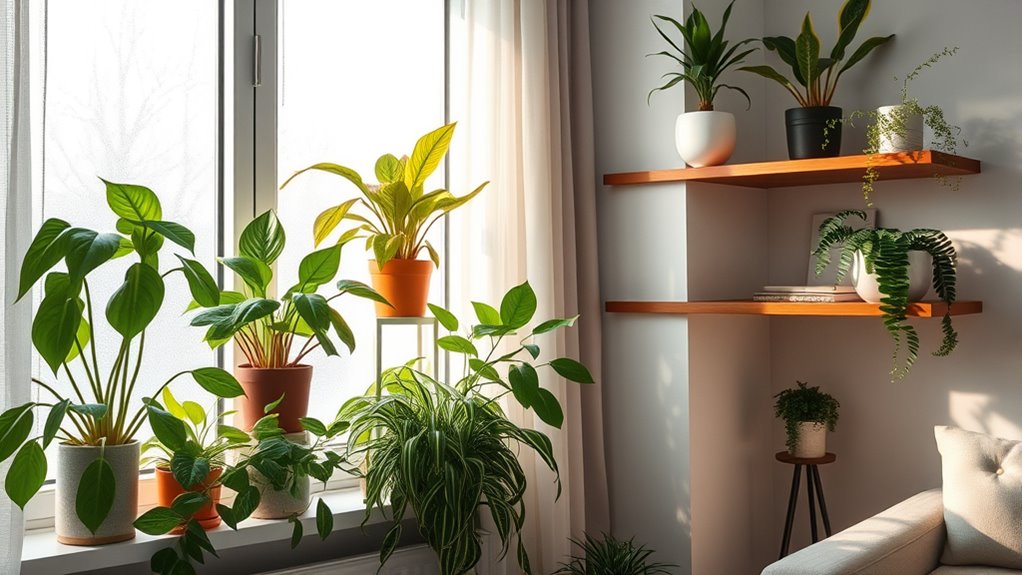
Adding air-purifying plants is an easy way to improve your indoor air quality. Many options require minimal care and thrive indoors, making them perfect for busy households. Incorporating these plants not only cleans the air but also adds a touch of greenery to your space. Using Free Floating plants can enhance natural purification without taking up too much space. For example, some plants have been associated with improved air quality and can be easily integrated into your home environment. Additionally, choosing plants with low-maintenance requirements ensures they remain healthy and effective over time. Selecting plants with high transpiration rates can further boost humidity levels, which is especially beneficial during dry winter months. Moreover, selecting energy-efficient plant varieties can help optimize your indoor environment while conserving resources.
Air Purifying Plants
Incorporating houseplants is an easy and effective way to naturally improve your indoor air quality. Air purifying plants are known for their natural air filtration, removing toxins and boosting freshness. To maximize benefits, consider these top options:
- Snake Plant – thrives in low light, absorbs formaldehyde.
- Spider Plant – easy to care for, eliminates carbon monoxide.
- Peace Lily – adds humidity, filters benzene and trichloroethylene.
These plants not only enhance aesthetics but also actively clean the air you breathe. Their natural air filtration process helps reduce indoor pollutants, making your environment safer and more comfortable during winter months when ventilation might be limited. Incorporating these air purifying plants is a simple, stylish step toward healthier indoor air.
Easy Care Options
Looking for houseplants that are both easy to care for and effective at purifying your indoor air? Fortunately, many low-maintenance options can enhance your air quality naturally. Plants like pothos, snake plants, and peace lilies require minimal attention, making them perfect for busy homes. To maximize their benefits, use air quality sensors to monitor pollutant levels and identify the best spots for placement. Position plants where they can improve natural air flow, such as near windows or vents, allowing fresh air to circulate and pollutants to be filtered out more efficiently. These simple additions don’t just beautify your space—they actively contribute to healthier indoor air with little effort, helping you breathe easier all winter long.
Make Use of Exhaust Fans in Kitchen and Bathroom
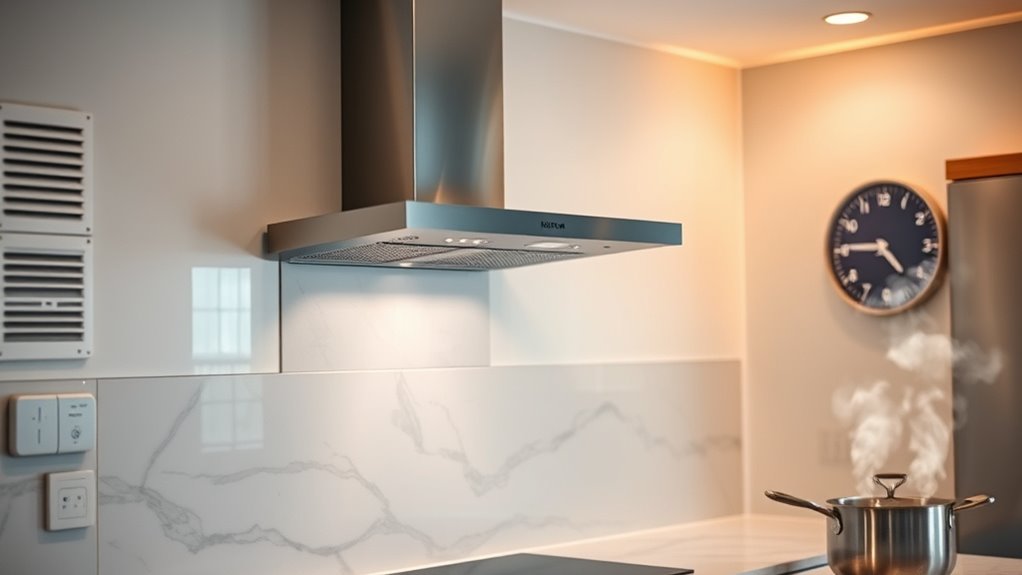
Exhaust fans in your kitchen and bathroom play a crucial role in maintaining good indoor air quality by venting out moisture, odors, and airborne pollutants. Proper use of exhaust fans enhances kitchen ventilation and prevents mold, mildew, and stale air buildup. To maximize their effectiveness, consider these tips:
- Turn on exhaust fans before cooking or showering to start ventilating early.
- Keep fans running for at least 15-20 minutes after activities to clear lingering moisture.
- Regularly clean exhaust fan filters to ensure peak airflow and prevent dust buildup.
- Installing smart exhaust fans with automatic activation and humidity sensors can further optimize ventilation efficiency.
- Ensuring proper ventilation capacity is essential for effective moisture and pollutant removal, especially during winter months when natural ventilation is limited.
- Adequate air exchange rates are critical for maintaining a healthy indoor environment by removing excess humidity and airborne contaminants.
- Incorporating local automation systems can help coordinate ventilation with other smart home devices to improve overall indoor air quality.
- Understanding and maintaining ventilation standards can help ensure your indoor air remains fresh and healthy year-round.
Using exhaust fans consistently helps reduce humidity and airborne pollutants, making your indoor environment healthier. Proper kitchen ventilation with these fans minimizes the risk of mold and improves overall air quality, especially during winter when windows are less likely to be open.
Create a DIY Air Purifier With Activated Charcoal or HEPA Filters
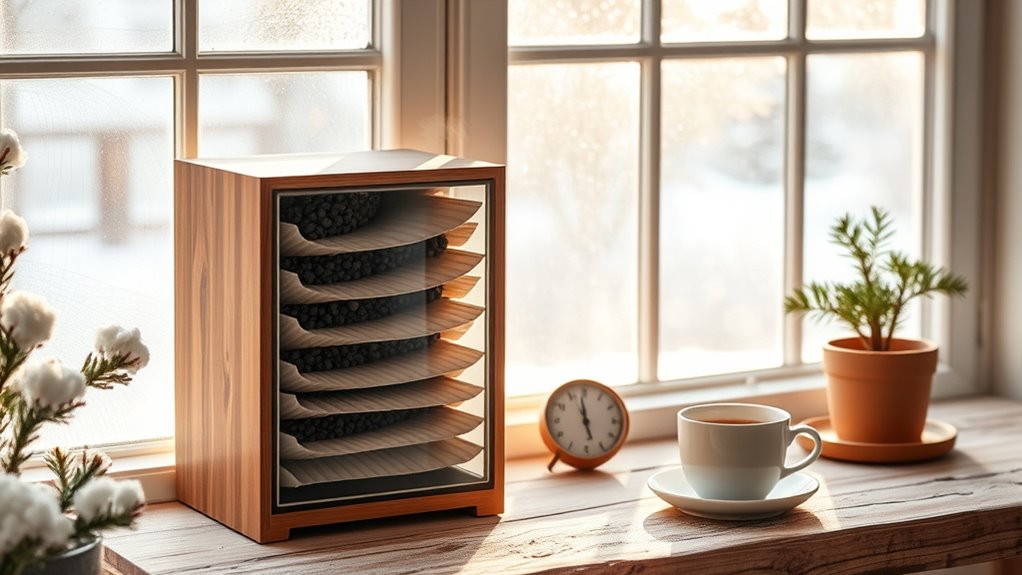
Creating a DIY air purifier using activated charcoal or HEPA filters is an effective way to improve your indoor air quality without purchasing expensive commercial units. Activated charcoal is excellent for absorbing odors, chemicals, and volatile organic compounds, making your space smell fresher. HEPA filters are designed to trap tiny particles like dust, pollen, pet dander, and airborne pathogens, markedly reducing allergens. To build your purifier, start with a box fan, attach a HEPA filter or a layer of activated charcoal inside a frame, and secure it with tape or rubber bands. Turn on the fan, and it will draw in air through the filter, cleaning it before it circulates back into your room. This simple setup can dramatically improve indoor air quality during winter months. Additionally, filter maintenance is crucial to ensure ongoing effectiveness and prevent mold or bacterial growth inside your DIY air purifier.
Use Humidifiers or DIY Humidifying Techniques

Have you noticed dry skin, sore throats, or increased static electricity indoors? These are signs your air may be too dry. To combat this, consider using DIY humidifiers or homemade misting systems. Here are three simple options:
- Place bowls of water near heat sources to add moisture as the water evaporates.
- Use a damp cloth draped over a radiator or air vent to release humidity.
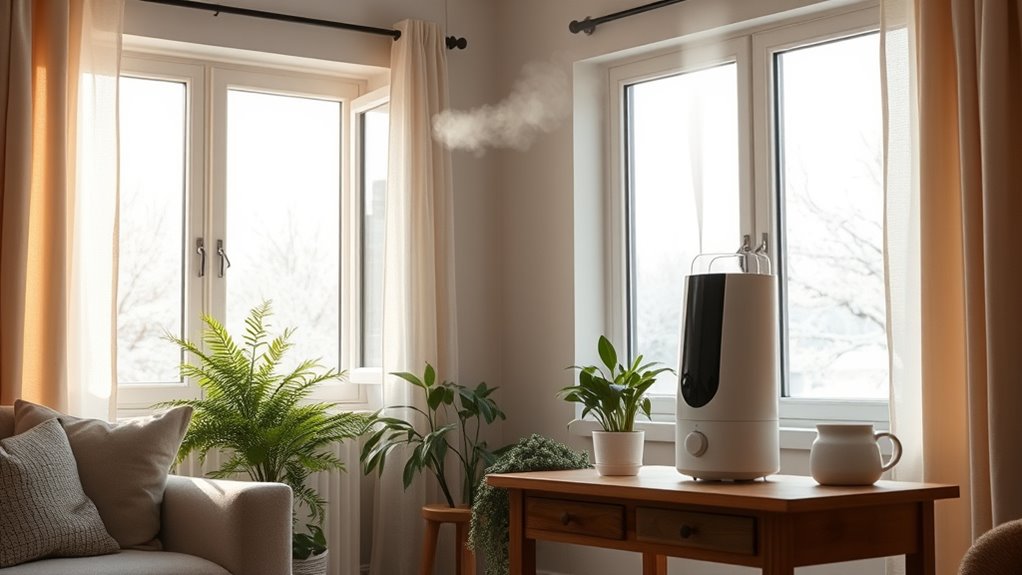
- Build DIY humidifiers with household items like sponge and a fan to disperse moisture evenly. Incorporating indoor air quality awareness can also help you recognize changes in your environment that may affect comfort. Utilizing high-quality glassware in your humidification methods can enhance the aesthetic appeal of your space while improving humidity levels. These techniques help maintain healthier indoor humidity levels during winter. Homemade misting systems, created with spray bottles or humidifier parts, are effective for targeted humidification. Additionally, monitoring and adjusting indoor air quality can ensure optimal humidity levels and prevent issues caused by overly dry air. Proper ventilation is also key to maintaining a comfortable indoor environment. Incorporating plants that release moisture naturally can further enhance indoor humidity, making your space more comfortable and healthier. By using these simple methods, you can improve comfort and indoor air quality without expensive equipment.
Control Indoor Humidity Levels With Simple Tools
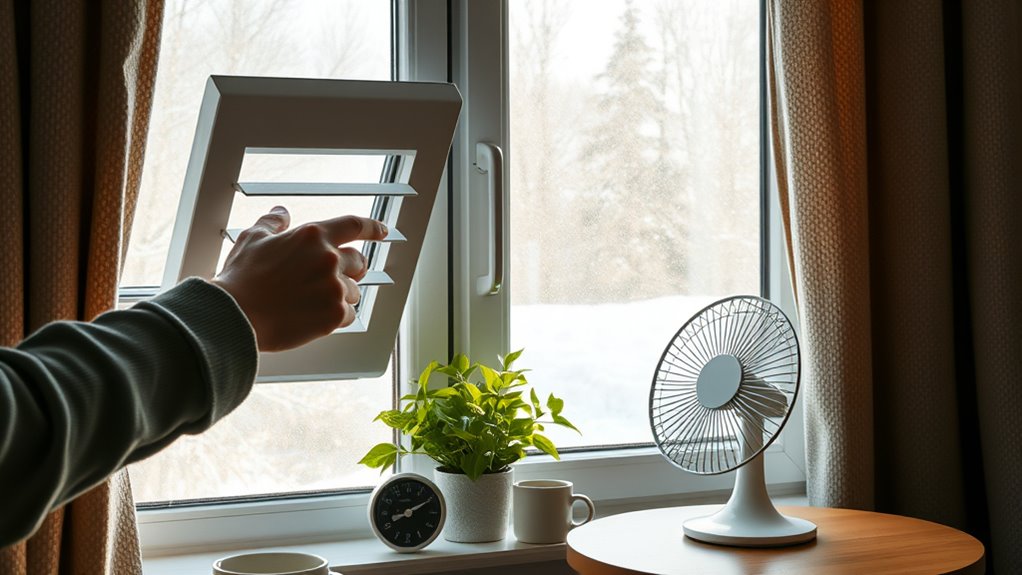
Controlling indoor humidity levels doesn’t require complex equipment; simple tools can do the job effectively. To maintain best moisture, focus on humidifier maintenance by regularly cleaning and replacing filters. This prevents mold and bacteria buildup, ensuring healthier air. Use a hygrometer to monitor humidity and adjust your humidifier accordingly, achieving proper moisture balancing. If humidity gets too high, reduce humidifier use or ventilate rooms to prevent mold growth. Conversely, if it’s too low, add moisture with bowls of water or houseplants. Simple tools like these help you keep humidity levels in the ideal range, enhancing comfort and reducing respiratory issues. Regular upkeep and attentive monitoring are key to managing indoor moisture without overcomplicating your approach. Additionally, choosing dog-friendly humidifiers can ensure safety for household pets while maintaining optimal humidity. Incorporating compact humidifiers can also be a convenient way to manage moisture in smaller spaces. Proper ventilation techniques are essential for maintaining balanced humidity and fresh air circulation, which is especially important in seasonal changes like winter.
Improve Air Circulation With Fans and Ventilation Aids

Are you making the most of fans and ventilation aids to improve indoor air circulation? Proper airflow helps reduce stale air and maintains fresh indoor conditions. Start by:
Maximize indoor air quality with fans and vents for fresher, healthier living spaces.
- Using ceiling fans to evenly distribute air throughout your rooms.
- Installing window vents to facilitate natural cross-ventilation and fresh air intake.
- Combining both, ensuring ceiling fans work with open windows to maximize airflow without losing heat in winter.
Ceiling fans can be set to rotate clockwise at low speed, pushing warm air down and improving circulation. Window vents help bring in fresh air while exhausting stale indoor air. Together, these tools keep your indoor environment healthier and more comfortable, especially during winter when proper ventilation can be challenging but essential.
Reduce Indoor Pollutants and Dust Sources
Reducing indoor pollutants and dust sources begins with regular cleaning to remove dust, pet dander, and allergens that can accumulate on surfaces and in the air. Dust accumulation often traps airborne allergens, worsening indoor air quality. To minimize these issues, vacuum carpets and upholstery frequently using a HEPA filter vacuum, and dust surfaces with a damp cloth to prevent particles from becoming airborne. Keep pets groomed and wash their bedding regularly to reduce pet dander. Avoid clutter, which can trap dust and allergens. Using air purifiers equipped with HEPA filters helps capture airborne allergens that cleaning alone might miss. By controlling dust and allergen sources, you create a healthier environment, especially during winter when indoor air circulation is limited.
Maintain and Clean Ventilation Systems Regularly

Regularly maintaining and cleaning your ventilation systems is essential for ensuring good indoor air quality. Neglecting this can lead to dust buildup, mold, and reduced airflow. To keep your system in top shape:
- Check and replace filters regularly to prevent dust and allergens from circulating.
- Inspect ducts for dust, mold, or obstructions, ensuring they’re clean and intact.
- Schedule professional duct inspections annually to identify hidden issues and maintain ideal airflow.
Frequently Asked Questions
How Often Should I Replace or Clean DIY Air Purifiers?
You should replace filters in your DIY air purifier every 3 to 6 months, depending on usage and air quality. Regularly clean the purifier, including the exterior and pre-filters, every month to guarantee peak performance. Keep an eye on filter discoloration or reduced airflow, which indicate it’s time for a replacement. Consistent filter replacement and purifier cleaning help maintain healthy indoor air and prolong your device’s lifespan.
Which Houseplants Are Most Effective for Air Purification Indoors?
You should consider plant air purifying options like snake plants, pothos, and peace lilies. These non-toxic species are effective at removing indoor pollutants and improving air quality. Place them in well-lit areas and water them appropriately to keep your indoor environment healthy. Incorporating these houseplants into your space can naturally boost air quality, making your home more comfortable and inviting without any harmful effects.
Can DIY Humidifiers Cause Mold Growth if Not Maintained Properly?
Yes, poorly maintained DIY humidifiers can cause mold growth. If you neglect humidifier maintenance, excess moisture can promote mold and bacteria buildup. To prevent this, regularly clean your humidifier, change the water daily, and dry all parts thoroughly. Proper mold prevention involves keeping humidity levels in check and ensuring your device stays clean. By maintaining your humidifier properly, you can enjoy healthier indoor air without risking mold issues.
What Are the Safest Materials for Homemade Ventilation Aids?
You should choose sustainable materials like bamboo, cork, or untreated wood for homemade ventilation aids, as they’re durable and eco-friendly. Opt for non-toxic options such as natural paints or sealants to prevent off-gassing. Avoid plastics or treated woods that may release harmful chemicals. These safe materials guarantee your DIY ventilation aids improve air quality without introducing toxins, making your indoor environment healthier and more sustainable.
Is It Better to Use Natural or Electric Fans for Air Circulation?
Think of natural ventilation as a gentle breeze that refreshes your home, while electric fans act like a steady hand, pushing stale air out. Natural ventilation is often better for energy efficiency and air quality, but electric fans provide consistent airflow when outdoor conditions aren’t ideal. If you want reliable air circulation, electric fans are your best bet; for a more eco-friendly approach, prioritize natural ventilation whenever possible.
Conclusion
By implementing these simple DIY strategies, you can markedly improve your indoor air quality this winter. For example, opening windows daily and using houseplants can reduce pollutants naturally. Imagine a family breathing easier during colder months because they created better ventilation and humidity control. Take small steps now—like making a DIY humidifier or installing exhaust fans—and enjoy healthier, more comfortable indoor air all season long. Your lungs will thank you!