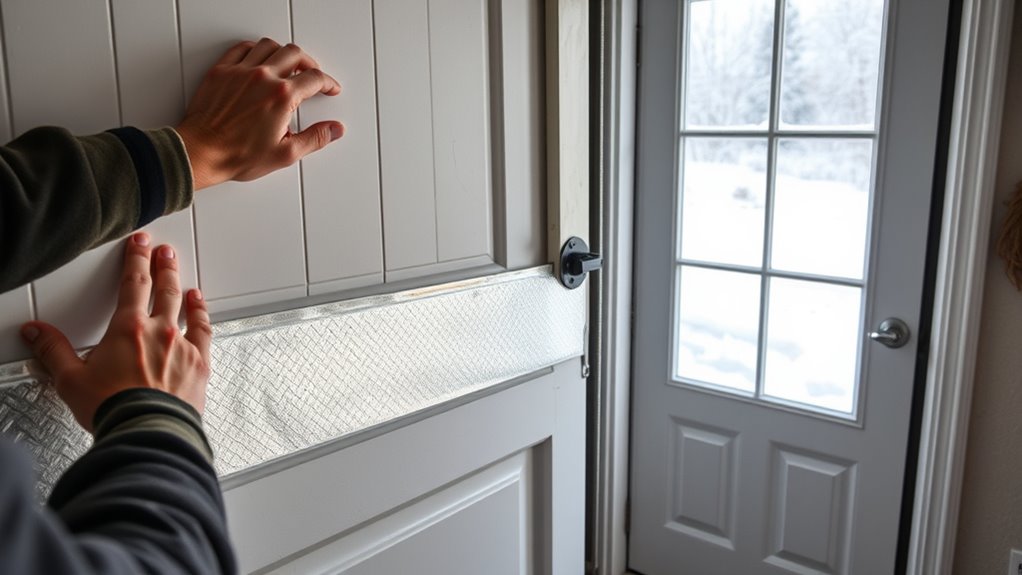

To insulate your garage door for winter, start by evaluating its current condition and measuring each section carefully. Gather suitable insulation panels or foam boards, along with tools like a utility knife, measuring tape, and adhesive. Prepare the door surface by cleaning and repairing any damage. Cut and fit the insulation tightly into each section, then seal gaps with weatherstripping or foam sealant. Keep going to discover detailed steps for a warm, energy-efficient garage.
Key Takeaways
- Measure each section of your garage door accurately to determine the right insulation panels or roll size.
- Clean and repair the door surface to ensure proper adhesion and effective insulation installation.
- Choose suitable insulation materials like foam panels or reflective barriers based on climate and budget.
- Cut insulation panels precisely to fit each section, ensuring a snug, gap-free fit for maximum efficiency.
- Seal all edges and gaps with weatherstripping and adhesive to prevent drafts and enhance winter insulation.
Assessing Your Garage Door’s Insulation Needs

Before insulating your garage door, you need to determine how much insulation it requires. Start by inspecting your garage door’s current condition and aesthetic appeal. Thick, well-maintained doors may need less insulation, while older or damaged ones might benefit from extra layers. Consider how insulation impacts garage door aesthetics; choose materials that complement your home’s style. Timing is also essential—understanding the insulation installation timelines helps you plan your project efficiently. Measure the door’s size accurately to estimate the amount of insulation needed, ensuring a proper fit. This assessment guarantees you select the right insulation type and thickness, balancing energy efficiency with visual appeal. Taking these steps saves you time and money, leading to a warmer, more comfortable garage. Additionally, understanding the benefits of energy efficiency can motivate you to choose the best insulation options for your needs. Moreover, selecting insulation with appropriate fire resistance properties enhances safety in your garage space. Conducting a proper load calculation can further optimize your insulation choice and overall energy savings. Performing a cost analysis can also help you compare different insulation materials and their long-term savings potential. Considering regulatory standards may ensure your insulation installation complies with local building codes and safety requirements.
Gathering the Necessary Materials and Tools

To effectively insulate your garage door, you’ll need to gather all the necessary materials and tools beforehand. Start with insulation panels or roll insulation suitable for garage doors. You’ll also need a utility knife, measuring tape, and a straightedge for cutting. Have weatherstripping and adhesive on hand to seal gaps. For insulation disposal, prepare trash bags or recycling containers to discard any old or damaged insulation materials safely. Consider storage solutions like bins or boxes to organize tools and leftover supplies. A cordless drill or screwdriver may be useful for attaching insulation panels or weatherstripping. Making sure you have everything ready beforehand saves time and guarantees the project runs smoothly. Proper preparation makes the entire insulation process more efficient and less stressful. Additionally, understanding the insulation types best suited for garage doors can enhance the effectiveness of your project. Knowing the R-value needed for winter insulation can help you choose the most energy-efficient options. Being aware of the best insulation materials can further optimize your garage’s thermal performance, especially when selecting materials with the appropriate thermal resistance. For added efficiency, consider researching insulation installation tips to ensure proper coverage and sealing.
Measuring Your Garage Door for Insulation Panels

How do you guarantee your insulation panels fit perfectly? Measure your garage door carefully to ensure a seamless look that boosts both insulation and garage door aesthetics. Start by noting the width and height of each section, including the panels and any windows. Use a tape measure with insulation installation tools like a level or straightedge for accuracy. Record measurements precisely, subtracting a small margin (about 1/4 inch) to prevent panels from being too tight. If your garage door has windows or panels, measure each section individually. Accurate measurements help you cut insulation panels to the right size, ensuring a professional appearance. Properly fitted panels improve insulation efficiency and maintain your garage door’s visual appeal during the winter months. Paying attention to door measurements ensures your DIY insulation project is successful and energy-efficient. Additionally, double-checking your measurements can help prevent gaps that reduce the overall insulation effectiveness, and understanding how insulation materials work can help you choose the best options for your needs.
Choosing the Right Insulation Material

Choosing the right insulation material depends on factors like effectiveness, cost, and durability. You should consider the R-value to make sure adequate insulation, while also balancing your budget and long-term needs. Understanding the different types of materials will help you make the best choice for your garage door. Additionally, selecting essential oils for insulation can improve the overall comfort and air quality inside your garage during winter. Incorporating smart home automation features, such as automated climate control, can further enhance energy efficiency and maintain a consistent indoor environment. Furthermore, choosing energy-efficient insulation materials aligns with sustainable practices and can contribute to lower heating costs over time. Considering insulation installation techniques can also ensure that your chosen material performs optimally and provides the best insulation results.
Insulation Material Types
Selecting the right insulation material for your garage door is essential to maximize energy efficiency and comfort. Common options include foam boards, reflective barriers, and fiberglass batts. Foam boards provide good R value options, offering strong insulation with minimal thickness, making them ideal for tight spaces. Reflective barriers work by reflecting radiant heat, which helps keep your garage cooler in summer and warmer in winter. They’re lightweight and easy to install, often used as a vapor barrier as well. Fiberglass batts are cost-effective and widely available, but they may require a vapor barrier for superior performance. Consider your climate and budget when choosing, ensuring the material suits your insulation needs while providing durability and ease of installation. Proper installation techniques also play a crucial role in maximizing the insulation’s effectiveness. Additionally, understanding insulation material types can help you select the most suitable option for your specific needs and climate conditions, especially regarding thermal performance and durability factors. Being aware of insulation R values can further guide your choice to achieve optimal energy efficiency. A thorough understanding of thermal conductivity can also assist in selecting materials with better insulating properties for your climate.
R-Value Considerations
Understanding the R-value of insulation is essential because it measures how well a material resists heat transfer. A higher R-value means better insulation performance. When choosing insulation, compare U value ratings alongside R-values to see how they perform in heat transfer reduction. U value comparison helps you understand the overall efficiency of different materials. Keep in mind that insulation thickness affects R-value; thicker insulation typically provides a higher R-value. However, consider your garage door’s space limitations to select a balance between insulation thickness and effectiveness. For cold winters, aim for materials with higher R-values to maximize warmth. Additionally, selecting appropriate insulation materials can optimize thermal resistance without unnecessary bulk. Understanding thermal resistance is also crucial because it guides you in achieving the desired insulation performance efficiently. Moreover, considering the cost-effectiveness of insulation options ensures you get the best value for your investment while maintaining optimal insulation levels.
Cost and Durability
When selecting insulation for your garage door, considering cost and durability guarantees you get the best value and long-lasting performance. Conduct a thorough cost analysis to compare prices across different materials like polystyrene, polyurethane, or reflective foil. Keep in mind durability factors such as resistance to moisture, compression, and physical damage. Some materials may cost more initially but offer better longevity and insulation efficiency over time, saving you money in the long run. Cheaper options might wear out faster or lose insulating properties, leading to higher replacement costs. By weighing the upfront investment against long-term durability, you can choose an insulation material that provides reliable protection against winter cold and offers durability for years to come.
Preparing the Garage Door Surface

Before insulating your garage door, it’s essential to prepare its surface properly. This step ensures your insulation stays effective and enhances your garage door aesthetics. Start by cleaning the door thoroughly to remove dirt, dust, and grease, which can affect adhesion. Inspect for any damage or rust that could compromise both appearance and garage door maintenance. Smooth out rough spots and repair dents to create an even surface. Additionally, consider sanding any peeling paint for better insulation adhesion. Taking these steps will improve the overall look and function of your door. Remember, a well-prepared surface not only boosts insulation efficiency but also extends your garage door’s lifespan, keeping it attractive and well-maintained year-round.
Cutting and Fitting Insulation Panels

Once you’ve prepared the garage door surface, it’s time to cut and fit the insulation panels. Measure each section carefully, ensuring your cuts align with the door’s panels for a snug fit. Use a sharp utility knife or a saw, depending on the insulation material, to create precise cuts. Remember, proper cutting is essential for effective insulation installation and thermal barriers. Fit each panel tightly against the door surface, avoiding gaps that could reduce insulation efficiency. Secure the panels with adhesive or tape if needed, but focus on accurate fitting first. This step ensures your insulation provides the best thermal barriers against winter drafts and heat loss. Take your time during this process to ensure a seamless fit across all sections of your garage door.
Securing the Insulation in Place
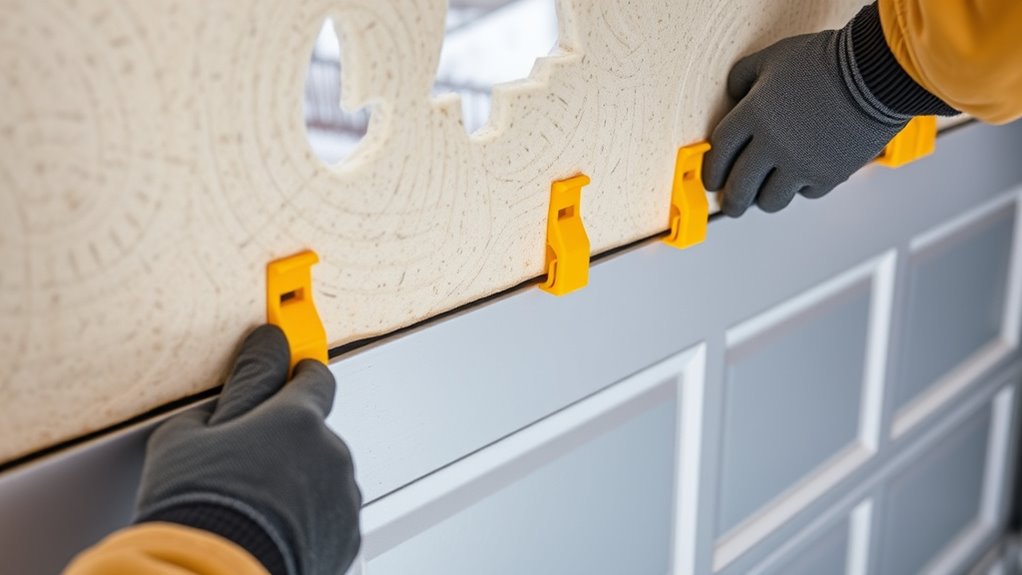
To guarantee your insulation stays firmly in place, start by securing the panels with appropriate fasteners or adhesives. Proper adhesive techniques ensure the insulation adheres evenly and stays intact through temperature changes. For ideal insulation aesthetics, choose fasteners that are discreet and match your garage door color. Consider using weather-resistant adhesive sprays or specialized insulation adhesives for a strong bond. Here are some tips to secure your insulation effectively:
- Use insulation-specific adhesive spray for quick, even coverage
- Apply fasteners along the edges and at regular intervals for stability
- Press panels firmly to ensure good contact and adhesion
- Avoid overusing adhesives to prevent bulging or uneven surfaces
These steps will help your insulation stay in place and look neat, maximizing energy efficiency.
Sealing Gaps and Edges for Maximum Efficiency

After securing your insulation panels, the next step is to seal any gaps and edges. Use weather stripping around the garage door frame to block drafts and prevent heat loss. Proper draft proofing helps maintain a consistent indoor temperature and improves insulation efficiency. Check for small gaps along the sides, top, and bottom of the door, and apply weather stripping where needed. Pay special attention to corners and edges, ensuring they’re tightly sealed. You can also add foam sealant or door sweeps at the bottom to further block cold air entry. Remember, the goal is to create a tight seal that reduces drafts and maximizes your insulation’s effectiveness during winter. Taking these steps will keep your garage warmer and more energy-efficient.
Testing the Insulation Effectiveness

Testing the effectiveness of your garage door insulation is essential to guarantee it’s performing as intended. Proper testing reveals its thermal performance and confirms you’re maximizing energy savings. To evaluate, consider these methods:
- Use a thermal camera or infrared thermometer to detect cold spots or drafts.
- Conduct a visual inspection for gaps or areas where heat may escape.
- Place a tissue or piece of paper at the edges; if it moves with the breeze, insulation may need improvement.
- Check for heat loss during cold days by feeling the door’s surface for cold spots.
These tests help you identify weak points and ensure your insulation provides ideal thermal performance, reducing heat loss and lowering energy costs throughout winter.
Tips for Maintaining Your Garage Door Insulation

Regularly inspecting and maintaining your garage door insulation guarantees it continues to perform effectively. Check for tears, gaps, or damage that could compromise insulation and affect your garage door aesthetics. Use insulation installation tools to reseal or replace worn sections, ensuring a snug fit that prevents drafts. Keep the insulation clean and free of dust or debris, which can reduce its effectiveness. Lubricate hinges and moving parts to prevent unnecessary wear that might loosen insulation over time. Maintaining a clean, well-insulated garage door not only boosts energy efficiency but also preserves its appearance. Regular upkeep helps you catch potential issues early, saving you money on repairs and keeping your garage warm during winter.
Frequently Asked Questions
How Often Should I Re-Insulate My Garage Door?
You should re-insulate your garage door every 5 to 10 years, depending on insulation maintenance and the insulation lifespan. Regularly check for wear, damage, or gaps, especially after harsh winters or extreme weather. If you notice reduced energy efficiency or drafts, it’s time to re-insulate. Proper maintenance helps extend the insulation’s effectiveness and lifespan, ensuring your garage stays warm and energy-efficient year-round.
Can I Insulate a Garage Door With Automatic Openers?
Insulating your garage door is like giving it a cozy sweater, even with an automatic opener in place. Yes, you can insulate it; most insulation material options, like foam boards or batt insulation, won’t interfere with automatic opener compatibility. Just make certain the insulation isn’t too thick or bulky, so it doesn’t obstruct the opener’s mechanism. Proper installation keeps your garage warm and your opener functioning smoothly.
Is It Necessary to Remove the Garage Door for Insulation?
No, you don’t need to remove the garage door for insulation. You can insulate it by carefully applying insulation tools and materials directly onto the door’s surface. However, if you find that removal is necessary for better access or insulation installation, garage door removal becomes an option. Just ensure you follow proper safety procedures and have the right tools to make the process easier and safer.
What Are the Signs Indicating My Garage Door Needs Insulation?
Feeling a chill when you walk into your garage? That’s a sign your garage door needs insulation. Look for drafts, ice buildup, or fluctuating temperatures—these issues point to poor insulation. Common materials like foam boards or fiberglass can help. With DIY insulation tips, you can improve your garage’s warmth without much hassle, saving energy and money while making your space more comfortable.
How Do I Insulate a Garage Door in a Rental Property?
You can insulate a garage door in a rental property using temporary insulation solutions like foam board or reflective insulation, which won’t damage the door. Just cut the insulation to size, attach it with removable hooks or heavy-duty tape, and guarantee it covers the entire surface. This way, you boost energy efficiency without violating rental agreements or making permanent changes, saving you money and keeping your landlord happy.
Conclusion
Think of your garage door as the gateway to your home’s warmth—insulate it well, and you’re shielding your sanctuary from winter’s chill. By taking these steps, you’re not just sealing gaps; you’re forging a barrier against the cold, turning your garage into a cozy retreat. When you prioritize insulation, you’re planting a seed of comfort that grows stronger each winter, transforming your space into a fortress of warmth and resilience against nature’s harshest elements.