If you’re comparing magnetic and electronic stud finders for accuracy, electronic models usually deliver better results because they detect changes in wall density, pinpointing stud edges more reliably. Magnetic finders depend on metal fasteners, which may not be present everywhere or located precisely. While magnetic tools are simple and battery-free, electronic devices can be more precise across various wall types. Keep exploring to discover which tool best fits your needs and environment.
Key Takeaways
- Electronic stud finders detect wall density changes, often offering higher precision than magnetic finders that rely on fastener presence.
- Magnetic finders are accurate where metal fasteners are present, but their effectiveness depends on fastener location and wall type.
- Electronic models can locate edges and centers more reliably, reducing guesswork compared to magnetic tools.
- Walls without visible fasteners may hinder magnetic finders’ accuracy, whereas electronic finders can still detect studs via density changes.
- Both tools’ accuracy varies based on wall materials, but electronic finders generally provide more consistent and precise results.
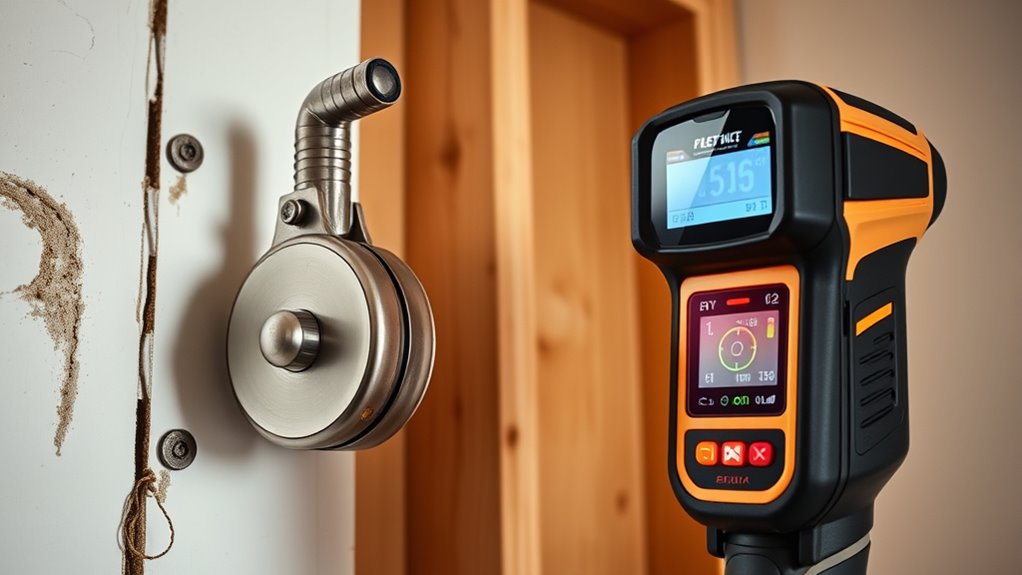
When it comes to locating studs behind walls, choosing the right tool can make all the difference. Whether you’re hanging pictures, installing shelves, or doing a full remodel, accurate material detection is essential. Magnetic and electronic stud finders are the most common options, each with its own advantages and limitations. Your choice depends on what you need in terms of ease of use and precision.
Magnetic stud finders are simple devices that use magnets to locate metal nails or screws embedded in wall studs. They’re straightforward, affordable, and don’t require batteries, making them a reliable choice for basic tasks. Because they rely on detecting metallic fasteners, they work well in most wall types, especially drywall. However, their effectiveness depends on whether the nails or screws are positioned correctly, and sometimes, they may miss the stud entirely if fasteners aren’t in the expected location. Magnetic finders are easy to operate—you just move the magnet along the wall until it sticks, indicating the presence of a fastener, and by extension, a stud. The ease of use is a significant plus, especially for DIYers who prefer a no-fuss tool.
Electronic stud finders, on the other hand, use sensors to detect changes in wall material density, making them capable of locating studs without relying solely on fasteners. These devices generally offer more advanced material detection, allowing you to find the edges or center of a stud with relative ease. Many electronic models feature visual or audio indicators, which make the process quicker and less guesswork. They’re especially handy when fasteners aren’t visible or when working with walls that contain insulation or other materials that can interfere with magnetic detection. While electronic stud finders tend to be more expensive and require batteries, they often provide a higher level of accuracy and versatility. Their ease of use is enhanced by features like calibration buttons and digital displays, making the process intuitive even for less experienced users. Additionally, understanding technology limitations can help users select the most effective device for their specific wall types.
Frequently Asked Questions
Can Magnetic Stud Finders Detect Live Electrical Wires?
Magnetic stud finders can’t reliably detect live electrical wires because they rely on magnetic strength, which only reacts to metal objects like nails or screws in studs. They lack wire detection capabilities, so you shouldn’t depend on them for that purpose. If you want to find live wires safely, use an electronic stud finder with wire detection features, as it can sense electrical activity through wall insulation.
How Does Wall Material Affect Stud Finder Accuracy?
Think of your wall as a tricky maze—its density and surface irregularities can throw off your stud finder’s accuracy. Dense materials like brick or concrete absorb signals, making detection harder. Irregular surfaces, like textured drywall, create false readings or hide studs altogether. You’ll get better results if you adjust your technique, use a high-quality electronic finder, and consider wall material—knowing these factors helps you pinpoint studs with confidence.
Are Electronic Stud Finders Safe for All Wall Types?
Electronic stud finders are generally safe for all wall types, but you should consider wall thickness and magnetic strength. Thicker walls or those with metal reinforcement can affect their accuracy, so you might need to calibrate the device properly. While electronic models use sensors and are safe to use on drywall, plaster, or paneling, always follow the manufacturer’s instructions to avoid damage or inaccuracies.
Do Magnetic Stud Finders Work Through Thick Drywall?
Magnetic stud finders can work through thick drywall, but their effectiveness depends on wall thickness and magnetic strength. If the drywall is very thick, the magnetic field might struggle to reach the stud, making it less reliable. However, if you have a strong magnet, it can still detect nails or screws embedded in the stud, even behind thicker walls. Keep in mind, thicker drywall can diminish magnetic detection, so choose a model with powerful magnetic strength.
Which Stud Finder Is Better for Professional Construction Use?
You need the best tool for professional construction, and electronic stud finders are the clear winners. They’re highly accurate, especially for locating studs behind thick drywall or multiple layers, making your work smoother. Installation tips, like calibrating correctly, guarantee precision. Budget considerations matter, but investing in a top-tier electronic finder pays off in efficiency and reliability. It’s like having a superpower—finding studs effortlessly even in complex walls.
Conclusion
So, which type is right for you—magnetic or electronic? While magnetic stud finders are simple and reliable for certain tasks, electronic models offer greater accuracy and versatility. Ultimately, your choice depends on your needs and projects. But considering the advancements in technology, isn’t it worth investing in an electronic stud finder to avoid unnecessary holes and guesswork? After all, isn’t precision what truly makes your DIY projects stand out?