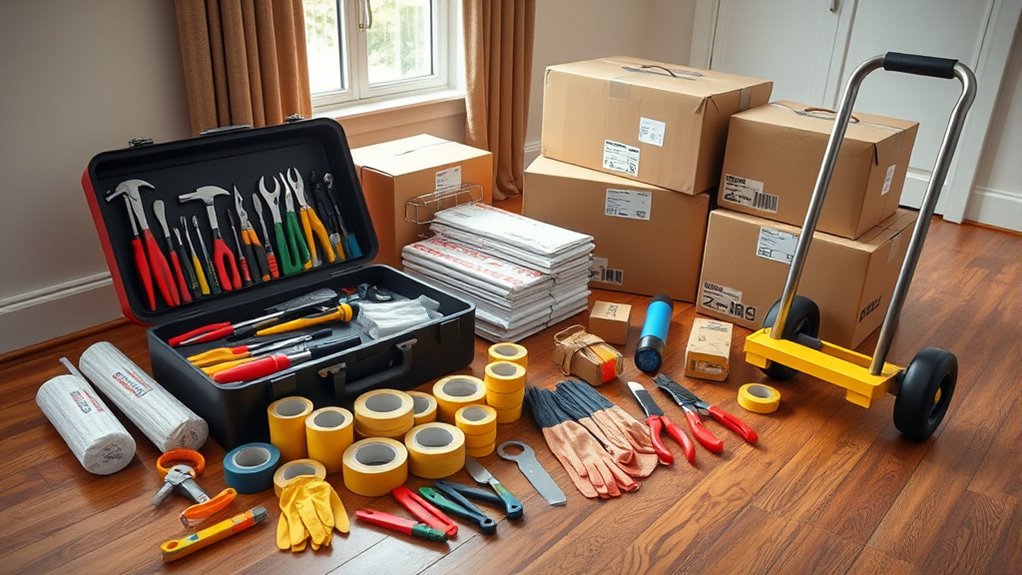
To make your move easier, gather essential tools like sturdy boxes, packing tape, bubble wrap, and markers for organizing and protecting your belongings. Make certain safety equipment such as gloves, knee pads, and non-slip shoes are accessible to prevent injuries. A well-stocked toolkit will help you handle everything efficiently and reduce stress. Keep safety gear handy and label everything clearly—continue exploring to discover more tips for a successful move.
Key Takeaways
- Pack with sturdy boxes, packing tape, bubble wrap, and labels to secure and organize belongings efficiently.
- Include safety gear such as gloves, knee pads, and non-slip shoes to prevent injuries during lifting and moving.
- Use a well-stocked toolkit with scissors, box cutters, and markers for quick access and effective packing.
- Keep a flashlight and first aid kit handy to handle unexpected issues or emergencies smoothly.
- Organize all supplies in a portable container or bag to ensure easy access throughout the moving day.
Are you prepared for the chaos of moving day? The key to a smoother experience lies in having the right tools at your fingertips. Before the big day arrives, make sure you’re stocked with essential packing supplies and safety equipment. Packing supplies are your first line of defense against damage and disorganization. Gather sturdy boxes, packing tape, bubble wrap, packing paper, and markers to label everything clearly. Using quality packing supplies helps protect your belongings and makes unpacking easier. Don’t skimp on these; investing in durable boxes and protective materials reduces the risk of breakage and saves you time and frustration.
Stock up on sturdy boxes, packing tape, bubble wrap, and markers for a stress-free move.
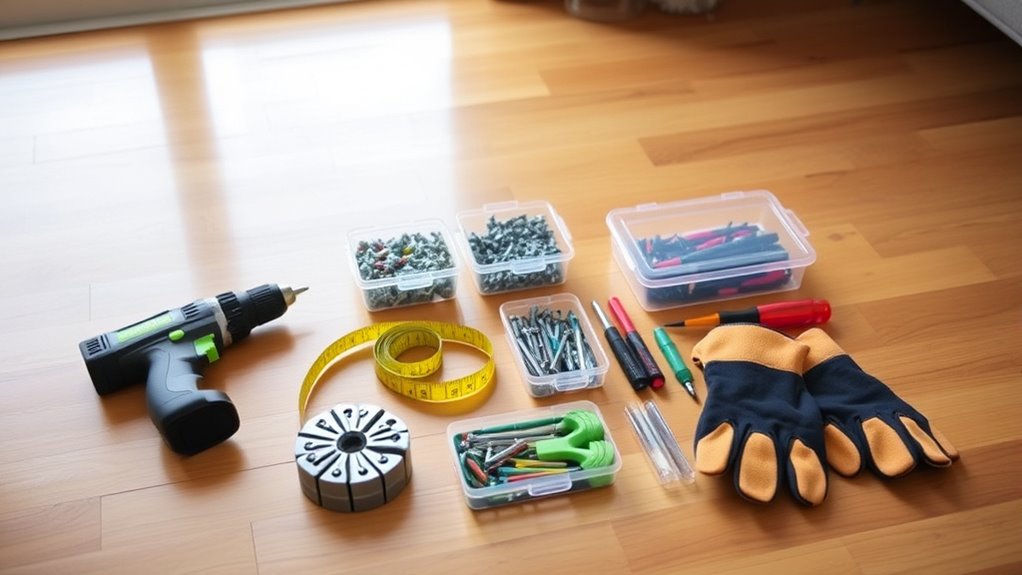
Alongside your packing supplies, safety equipment is essential. Moving often involves heavy lifting, sharp edges, and potential hazards. Equip yourself with gloves to protect your hands from cuts and splinters, especially when handling glass or bulky furniture. Knee pads can be a lifesaver if you need to crawl or kneel during packing or furniture moving, preventing painful scrapes and strains. A good pair of closed-toe shoes with non-slip soles keeps your feet safe from falling objects and slippery floors. If you’re moving in a multi-story building, consider using a dolly or hand truck, but always make sure it’s in good condition and used correctly. Additionally, keep a first aid kit nearby for minor injuries, and don’t forget to have a flashlight handy in case you need to navigate dark spaces or find items in poorly lit areas. Being aware of modern safety equipment can further enhance your protection during the move.
Preparing your moving toolkit ahead of time minimizes surprises and keeps you moving efficiently. As you pack, double-check that each box is securely sealed with packing tape, and label them clearly with contents and destination rooms. This saves time when unpacking and prevents you from rummaging through multiple boxes. Safety equipment should be easily accessible at all times, especially when lifting or moving heavy objects. Remember, rushing can lead to accidents, so take your time, lift properly, and use your safety gear as needed. Having a well-organized toolkit guarantees you’re ready to handle unexpected issues, like a box tearing open or a piece of furniture shifting.
Ultimately, a complete moving-day toolkit centered around reliable packing supplies and safety equipment makes your move safer and more efficient. It gives you confidence that you’re prepared for whatever challenges come your way. By prioritizing these essentials, you’ll reduce stress, protect your belongings, and stay safe throughout the entire process. Moving may be chaotic, but with the right tools, you can handle anything that comes your way, making your transition to a new home smoother and less stressful.
Frequently Asked Questions
How Do I Organize My Moving-Day Tools Effectively?
To organize your moving-day tools effectively, create a labeling system using checklists and labels for each box or container. Pack essential tools like screwdrivers, pliers, and tape separately, and label them clearly for quick access. Keep a master checklist to track what’s packed and what’s needed. This way, you’ll easily find what you need without rummaging through boxes, making your move smoother and less stressful.
Are There Specific Tools for Fragile or Valuable Items?
You definitely need specialized packing tools for fragile or valuable items. Use cushioning materials like bubble wrap, packing paper, or foam peanuts to protect delicate belongings. Consider sturdy boxes with dividers for added security. Some items, like artwork or electronics, require specific packing materials or padded cases. Don’t underestimate the importance of these tools; they keep your valuables safe and reduce stress during the move, ensuring everything arrives in perfect condition.
What Safety Gear Should I Include in My Toolkit?
You should include personal protective equipment like gloves, safety goggles, and sturdy footwear to safeguard yourself during the move. Safety signage can help mark hazardous areas and guide movers safely. Always wear gloves when handling fragile or heavy items, and use goggles to prevent injuries. Clear safety signage ensures everyone stays aware of potential dangers. Prioritizing safety gear minimizes accidents and keeps your move smooth and secure.
How Can I Prevent Tools From Getting Lost During the Move?
Imagine your toolkit as a treasure chest—don’t let your valuable tools become lost sailors adrift at sea. Use a solid labeling system and keep a detailed tool inventory to track each item. Store tools in designated containers or zip pouches, and double-check your list before and after the move. This way, you’ll steer clear of lost tools and make certain your moving voyage stays smooth and organized.
Should I Customize My Toolkit Based on the Moving Distance?
Yes, you should customize your toolkit based on the moving distance. For long-distance moves, pack extra packing supplies and transportation essentials like batteries, chargers, and basic tools to handle unexpected issues. For shorter moves, a smaller toolkit with essential tools might suffice. Always consider the specific needs of your move, ensuring you have what you need to stay organized, safe, and prepared throughout the process.
Conclusion
With your moving-day toolkit ready, you’re all set to tackle the big day head-on. Having the right tools by your side means you’re prepared for any surprises that come your way. Remember, when it comes to moving, it’s better to be safe than sorry. Keep calm, stay organized, and trust your preparations. As they say, a smooth move is worth its weight in gold—so go ahead and make your relocation as effortless as possible.