
Understanding screwdrivers involves knowing the differences between common types like Phillips and flathead. Phillips screwdrivers have a cross-shaped tip that provides better grip and torque, ideal for electronics and furniture. Flathead screwdrivers have a straight, flat blade suited for single-slot screws, often used in woodworking or electrical work. Beyond these, there are specialized styles like Torx or security screwdrivers for specific fasteners. Keep exploring to discover how to choose the right tool for every project.
Key Takeaways
- Phillips screwdrivers have a cross-shaped tip for better grip and torque in tight spaces, unlike flathead’s straight blade for single-slot screws.
- Flathead screwdrivers feature a flat, straight blade suited for slotted screws, offering precise control for soft or damaged screw heads.
- Beyond Phillips and flathead, there are specialized screwdrivers like Torx, Robertson, and security types for unique fasteners.
- Correct screwdriver selection ensures efficient fastening, prevents damage, and depends on matching tip type and size to screw head design.
- Proper maintenance and choosing ergonomic, high-quality tools extend lifespan and improve safety during use.
The Basics of Screwdriver Types

Screwdrivers come in various types designed for specific tasks, making it important to understand their differences. The historical development of screwdrivers shows how ergonomics and functionality evolved to meet user needs. Early screwdrivers were simple tools with straight handles, but over time, designs improved to enhance comfort and control. Today, screwdriver ergonomics focus on grip comfort, reducing hand fatigue during prolonged use. Different types, such as flathead, Phillips, and specialty screwdrivers, cater to various screw heads and applications. Recognizing these variations helps you choose the right tool for the job, ensuring efficiency and safety. An understanding of tool ergonomics can significantly improve your efficiency and comfort when working with screwdrivers. By understanding the basics of screwdriver types and their development, you gain a solid foundation for selecting the most suitable screwdriver for your projects, especially considering how ergonomic design has become a key factor in tool effectiveness. Additionally, awareness of screwdriver materials can influence durability and performance, helping you make better purchasing decisions. Moreover, the evolution of screwdriver materials reflects ongoing efforts to improve tool durability, which is essential for long-term use and reliability. Incorporating ergonomic considerations into tool design has further advanced screwdriver efficiency and user safety.
Features and Uses of Phillips Screwdrivers

Phillips screwdrivers have a distinctive cross-shaped tip designed for better grip and torque. You’ll find them commonly used in electronics, appliances, and furniture assembly, where a secure fit is essential. Their advantages over flathead screwdrivers include reduced slipping and easier use in tight spaces. Additionally, understanding thermal behavior of different screwdriver types can help in selecting the right tool for specific materials and tasks. Considering material compatibility is also crucial to prevent damage during use, especially in delicate or heat-sensitive applications. Moreover, knowing the contrast ratio can influence the choice of tools when working with sensitive or reflective surfaces to avoid glare or surface damage. Recognizing the performance ratings of screwdrivers can also guide users toward more durable and efficient tools for various projects. Being aware of screwdriver materials can further enhance reliability and safety during use, especially for heavy-duty tasks.
Tip Design and Size
Have you ever noticed how the tip of a Phillips screwdriver is specially designed to fit its unique screws? The cross-shaped tip ensures a firm grip, reducing slipping and stripping. The size of the tip varies to match different screw sizes, providing ideal contact and torque transfer. Proper tip design enhances tip durability, preventing wear and deformation over time. Handle ergonomics also play a role, allowing you to apply force comfortably and accurately. A well-designed tip ensures that you don’t have to force the screwdriver, which could damage both the tool and the screw. Choosing the right tip size is essential for precise work, especially in delicate or detailed projects. Additionally, tool compatibility between screwdriver tips and screw heads is crucial for effective fastening. Moreover, understanding screw types and their corresponding screwdriver tips can further improve efficiency and results. The manufacturing quality of the tip also impacts its longevity and performance, making it an important consideration when selecting a screwdriver. Considering material composition can further influence the durability and suitability of the tip for different applications. Overall, the tip design and size directly influence the screwdriver’s efficiency and longevity.
Common Application Areas
Thanks to their distinctive cross-shaped tips, Phillips screwdrivers are widely used in many applications where precision and efficiency matter. You’ll find them essential in home improvement projects, from installing shelves to mounting appliances. Their design helps prevent slipping, making them ideal for tasks requiring secure fastening. When assembling furniture, Phillips screwdrivers offer better grip and torque, reducing the risk of damaging delicate materials. They’re also useful in repair work, such as fixing appliances or tightening loose screws in cabinetry. Because they work well with screws that have a cross-shaped socket, they’re versatile and reliable across many household tasks. Additionally, proper tool selection can improve safety and efficiency when working with different fastener types. Using the right screwdriver type can also reduce stripping and cam-out, preserving the integrity of fasteners and materials. Incorporating correct torque application ensures that screws are driven to the optimal tightness, preventing damage and ensuring durability. Employing standardized screwdriver sizes can further streamline tasks and ensure compatibility with various fasteners. Moreover, understanding screwdriver compatibility helps prevent damage to screws and materials, making your work more effective and professional.
Advantages Over Flathead
What makes Phillips screwdrivers stand out compared to flathead tools? Their design offers better grip and control, especially with an ergonomic grip that reduces hand fatigue during extended use. The cross-shaped tip fits securely into the screw head, minimizing slipping and stripping. Unlike flathead screwdrivers, Phillips tools are versatile for a variety of applications, from electronics to furniture assembly. Magnetic tips are a major advantage, allowing you to easily hold screws in place and work more efficiently, especially in tight or hard-to-reach spots. This feature prevents dropped screws and speeds up your work. Additionally, ergonomic design improves user comfort and reduces fatigue during prolonged tasks. Incorporating innovative tool features can further improve your efficiency by integrating your tools with smart technology for real-time feedback, tool innovation that adapts to various tasks and user needs.
Characteristics of Flathead Screwdrivers
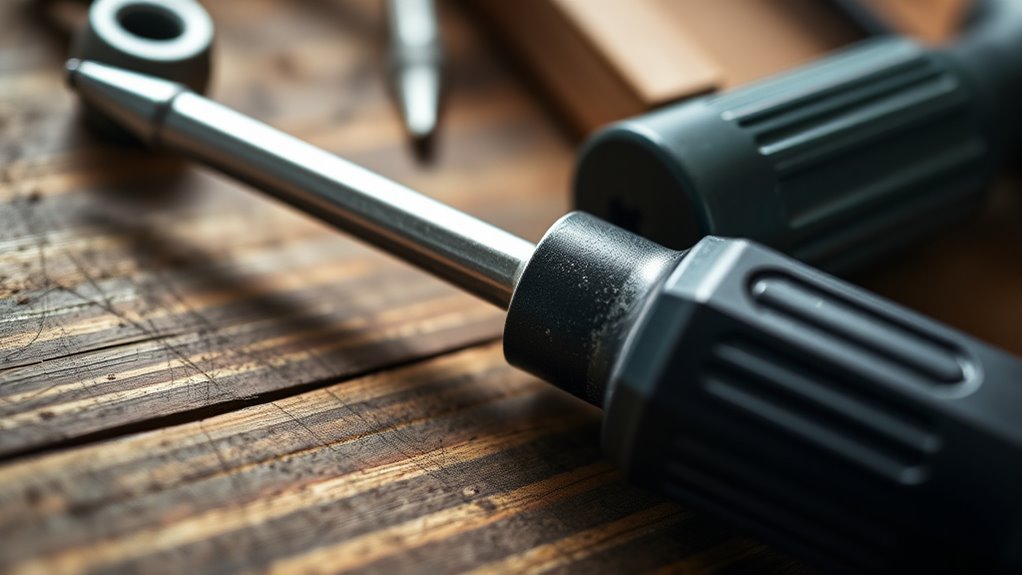
Flathead screwdrivers are characterized by their straight, flat blade that fits into single-slot screw heads. This simple design makes them easy to use for basic tasks. Many models feature ergonomic handle designs, which provide a comfortable grip and reduce hand fatigue during prolonged use. The handles often have textured surfaces for better control. Additionally, some flathead screwdrivers come with magnetic tip benefits, helping you hold screws securely and preventing slips. The straight blade allows for precise application of torque, making it suitable for tasks that require careful handling. Overall, their straightforward design, combined with ergonomic handles and magnetic tips, makes flathead screwdrivers versatile and reliable tools for everyday use.
Other Common Screwdriver Styles

Beyond flathead screwdrivers, there are several other popular styles designed for specific tasks and screw types. Phillips screwdrivers, for example, feature a cross-shaped tip that prevents slipping and allows for better torque. Precision screwdrivers are smaller and ideal for electronics or delicate work. Ergonomic handle design enhances comfort and grip, reducing fatigue during extended use. Magnetic tips are common across various styles, helping you hold screws securely, especially in tight or hard-to-reach spots. These features improve efficiency and accuracy, making your work smoother. Specialty screwdrivers, like Torx or Robertson, cater to unique fasteners, ensuring a snug fit and preventing damage. Exploring these styles equips you with versatile tools for a wide range of projects, ensuring you’re prepared for any task.
Choosing the Right Screwdriver for Your Project
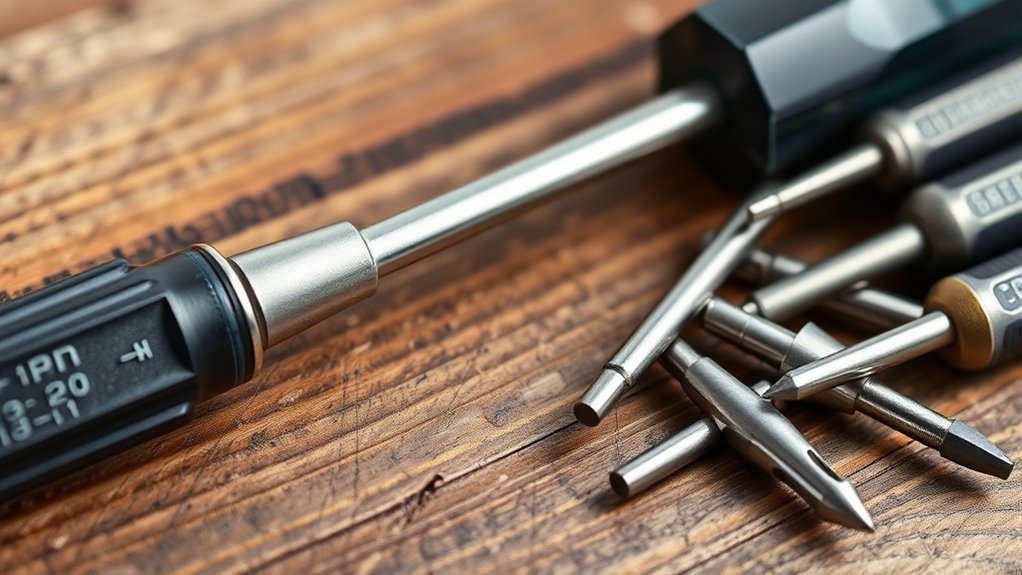
Choosing the right screwdriver is essential for completing your project efficiently and safely. To do this, consider these factors:
- Screw head compatibility – match the screwdriver tip to the screw type for a secure fit and prevent damage.
- Ergonomic handle designs – select tools with comfortable, non-slip handles to reduce fatigue and improve control.
- Size and length – choose a screwdriver that fits the screw size and reaches into tight spaces without difficulty.
- Material quality – opt for durable, high-quality materials to guarantee longevity and reliable performance.
Specialty Screwdrivers and Their Applications
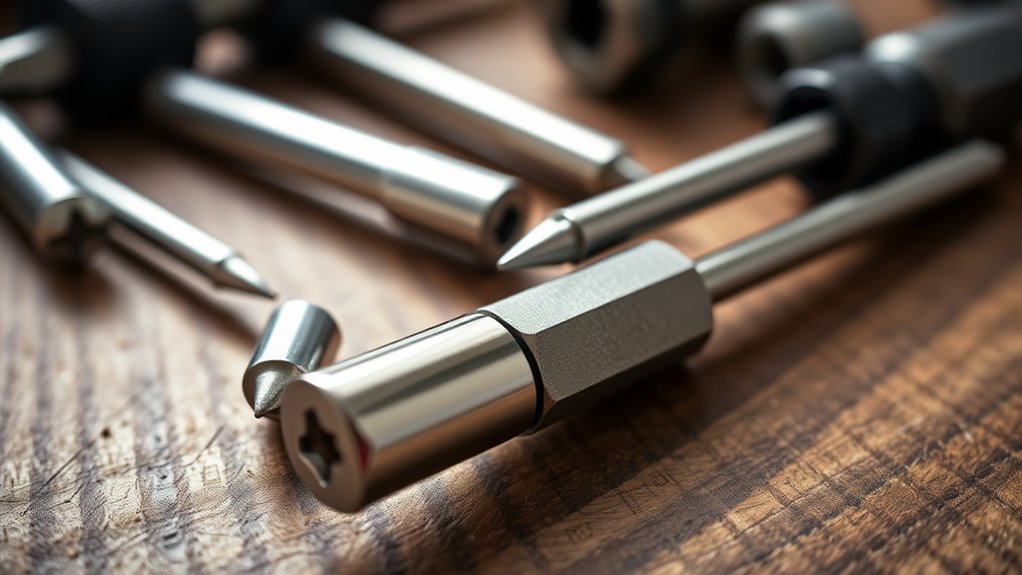
Specialty screwdrivers like Torx and security types are designed for specific fasteners, providing better grip and security. You’ll also find precision screwdrivers ideal for electronics, where accuracy is vital. Having a set of specialty screwdrivers ensures you’re prepared for any task, from delicate repairs to specialized applications.
Torx and Security Types
Torx and security screwdrivers are specialized tools designed to handle fasteners that standard screwdrivers can’t easily manage. They are essential for working with security screws, which often feature tamper-proof designs to prevent unauthorized access. These screwdrivers come in various shapes and sizes to match specific fasteners, offering increased security and durability.
- Torx drivers fit star-shaped fasteners, providing better torque transfer.
- Security Torx and tamper-proof variants include holes or pins to prevent standard tools from removing them.
- Security screws are common in electronics, appliances, and public fixtures for theft prevention.
- Using the right tool ensures secure fastening and reduces damage risks when working with tamper-proof designs.
Precision and Electronics Use
Have you ever wondered why precision screwdrivers are indispensable for electronics work? In electronics repair, small components require careful handling, and standard screwdrivers often lack the accuracy needed. Precision screwdrivers are designed with fine tips and exact tolerances, making them perfect for delicate tasks. These tools are crucial in precision engineering, where even minor mistakes can cause damage or malfunction. Using the right screwdriver minimizes risk and ensures secure connections without stripping screws or damaging sensitive parts. Whether you’re repairing smartphones, cameras, or circuit boards, precision screwdrivers give you the control needed for intricate work. They help you work efficiently and safely, preventing costly errors. For anyone involved in electronics repair, investing in quality specialty screwdrivers is a smart move.
Specialty Screwdriver Sets
Ever wondered why standard screwdrivers sometimes fall short? That’s where specialty screwdriver sets come in, designed for specific tasks. These sets often feature ergonomic grips, reducing hand fatigue during extended use. They include tools with magnetic tips, ensuring screws stay in place and are easier to handle. Here’s what makes them essential:
- Precision tips for tiny, delicate screws in electronics or jewelry.
- Security driver heads for tamper-proof screws.
- Offset or angled screwdrivers for hard-to-reach places.
- Interchangeable bits to cover a wide range of specialty screws.
Tips for Maintaining Your Screwdrivers

To keep your screwdrivers performing their best, regular maintenance is essential. Proper care enhances screwdriver ergonomics and prolongs their lifespan. Always clean your screwdrivers after use to prevent dirt and rust. Store them in a dry, organized space following storage tips to avoid damage and ensure quick access. Sharpen or replace worn tips promptly for better grip and efficiency. Check handles for cracks or looseness, replacing if necessary. Keep tips aligned for safety and precision. Here’s a quick guide:
| Maintenance Step | Tool/Tip | Purpose |
|---|---|---|
| Clean after use | Wipe with a cloth | Remove debris and moisture |
| Store properly | Use a toolbox or rack | Prevent damage and rust |
| Inspect regularly | Check handles and tips | Ensure safety and performance |
| Sharpen tips | Use a sharpening tool | Maintain grip and accuracy |
| Replace worn parts | Swap out damaged tools | Keep work efficient |
Frequently Asked Questions
Are There Environmental Impacts Associated With Different Screwdriver Materials?
Yes, there are environmental impacts linked to different screwdriver materials. When you choose screwdrivers made from sustainable materials, you help reduce resource depletion and pollution. Recyclability concerns also come into play, as some metals and plastics are easier to recycle than others. Opting for eco-friendly materials minimizes waste and environmental harm, making your tool choices more sustainable and responsible for the planet.
How Do Ergonomic Designs Improve Screwdriver Usability?
Ergonomic designs improve screwdriver usability by providing an ergonomic grip that reduces hand fatigue and increases comfort during use. A well-crafted handle design ensures a secure, non-slip grip, allowing you to apply more torque with less effort. This combination helps you work more efficiently and safely, especially during extended tasks. By focusing on ergonomic features, manufacturers make screwdrivers easier to handle, enhancing your overall experience and reducing the risk of strain injuries.
Can You Use a Phillips Screwdriver on Flathead Screws?
Sure, you can try using a Phillips screwdriver on flathead screws, but don’t expect it to fit or work well—think of it as trying to fit a square peg into a round hole. Screwdriver compatibility varies with screw head types, and using the wrong one can strip screws or damage tools. Stick with the right screwdriver for each screw, or you’ll just end up frustrated and possibly ruining your project.
What Safety Precautions Should Be Taken When Using Power Screwdrivers?
When using power screwdrivers, you should always wear safety gear like goggles and gloves to protect your eyes and hands. Make certain proper handling by keeping a firm grip, working in a stable position, and controlling the tool’s speed. Before starting, check the screwdriver and bits for damage. These precautions help prevent accidents, injuries, and damage to your workpiece, making your task safer and more efficient.
Are There Any Innovative Materials Making Screwdrivers More Durable?
You might find it surprising, but some screwdrivers now feature innovative materials like reinforced steel alloys and composite fibers, which substantially boost durability. These enhancements help resist wear and tear, extending their lifespan even under heavy use. By choosing screwdrivers with these advanced materials, you guarantee better performance and safety. As technology advances, expect more durable options that make your work easier and more reliable.
Conclusion
Think of your screwdriver collection as a toolkit of keys to unseal any project. With the right match—whether Phillips, flathead, or specialty—you hold the power to turn ideas into reality. Just like a master key opens doors, choosing the right screwdriver makes your work smoother and more successful. Keep them sharp, clean, and ready; your craftsmanship depends on it. With the right tools, you’re always prepared to open new possibilities.