
To keep your home safe, check your smoke and carbon monoxide detectors regularly, replace batteries yearly, and verify they are working. Inspect fire extinguishers, electrical cords, and outlets for damage or loose connections. Keep pathways clear of clutter, test locks on windows and doors, and review your emergency exit plans. Also, examine stairways and railings for stability. Doing these simple checks now can prevent accidents; learn more tips to protect your home and loved ones.
Key Takeaways
- Regularly test smoke and carbon monoxide detectors, replacing batteries annually and ensuring proper placement on all home levels.
- Inspect electrical cords and outlets for damage, loose connections, and proper grounding to prevent shocks and fires.
- Keep pathways clear of clutter, and verify that locks on windows and doors function correctly for security.
- Review and practice emergency evacuation routes, ensuring they are accessible and household members know the plan.
- Check stairs and handrails for stability, and inspect walls and foundations for cracks or damage to maintain structural safety.
Inspect Smoke and Carbon Monoxide Detectors
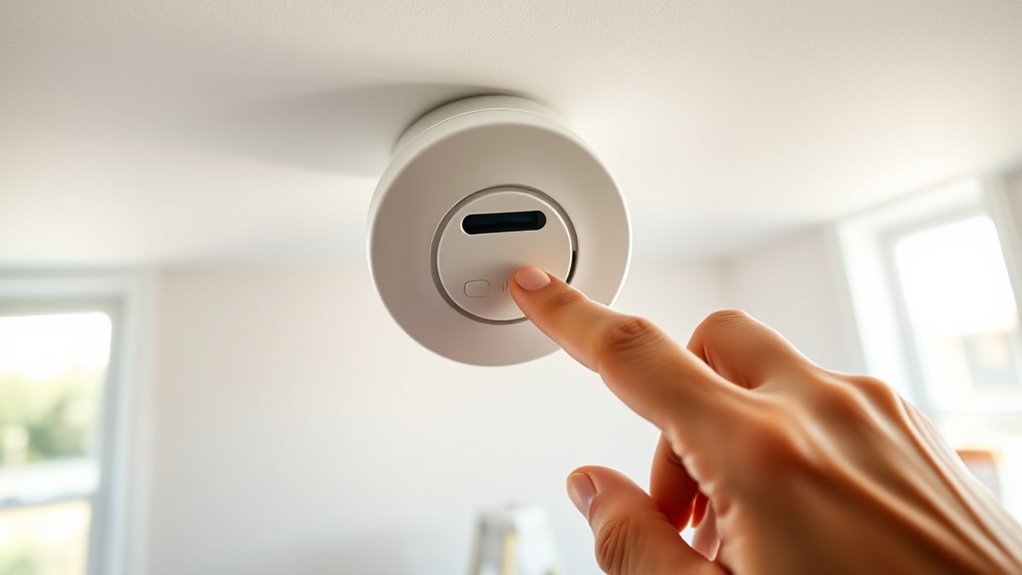
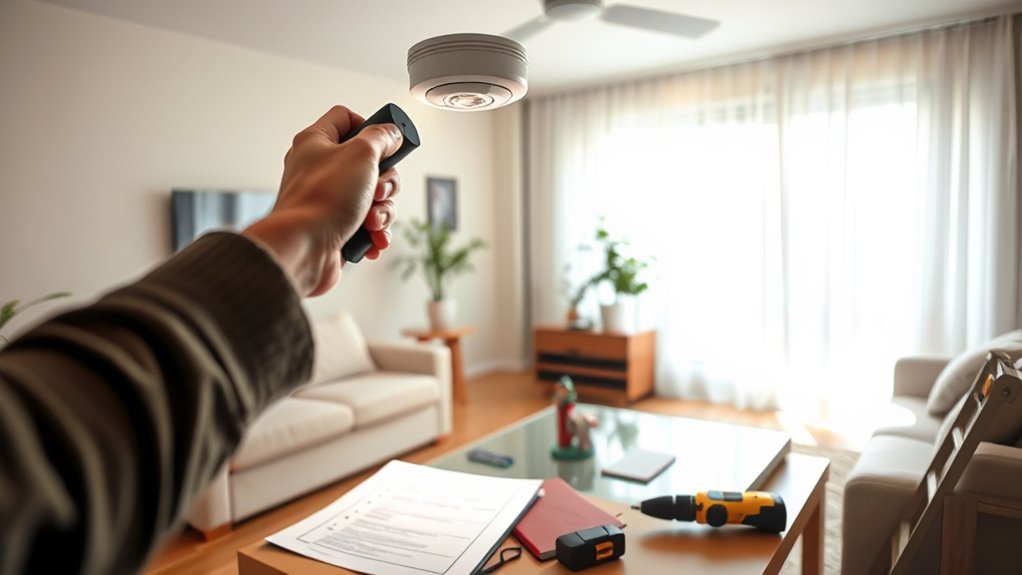
To guarantee your home stays safe, it’s important to regularly inspect your smoke and carbon monoxide detectors. Proper detector placement ensures these devices effectively alert you during emergencies, so check that they’re installed on every level and outside sleeping areas. Make sure detectors are mounted at recommended heights and away from vents or windows that could interfere with their operation. Battery maintenance is essential; replace batteries at least once a year or immediately if the detector beeps indicating low power. Test each detector monthly by pressing the test button to confirm it’s working correctly. Keeping detectors in good condition and correctly placed ensures prompt alerts, giving you critical time to respond and keep everyone safe. Additionally, understanding the testing procedures for your detectors can help verify their functionality more thoroughly. Regularly reviewing manufacturer instructions can also ensure you’re following the best practices for maintenance and troubleshooting. Remember that detector placement is crucial for optimal safety coverage throughout your home. Performing visual inspections periodically can help identify any potential issues early before they compromise safety. Incorporating routine safety checks into your home maintenance schedule can further enhance overall safety and peace of mind.
Check Fire Extinguishers and Emergency Supplies
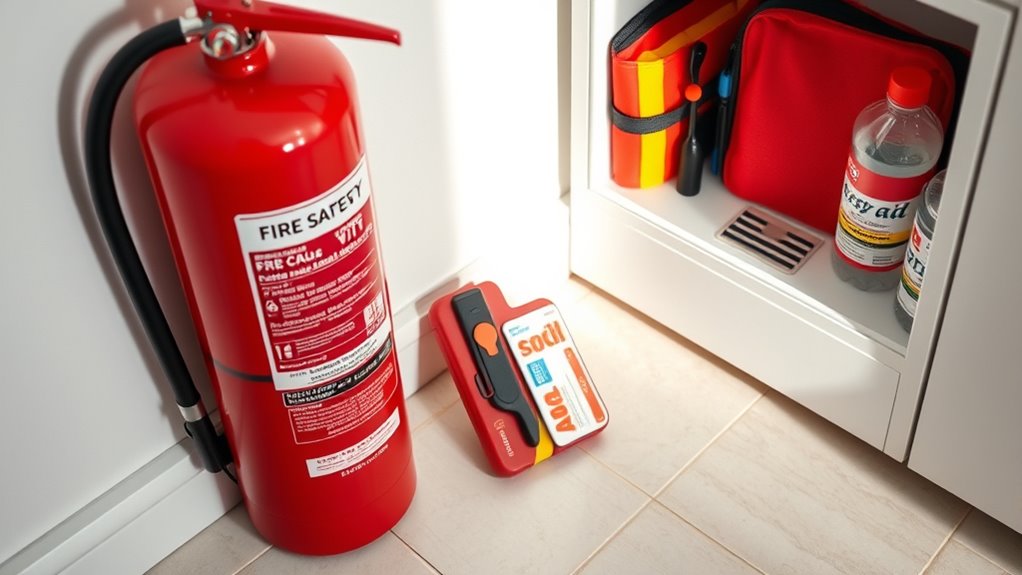
You should regularly check that your fire extinguisher has the right pressure and is in good working condition. Make sure your emergency kit has all essential items and is easy to access. Taking these steps helps guarantee you’re prepared for unexpected emergencies. Additionally, sizing and load‑planning tools from trusted sources can help ensure your home backup power system is appropriately designed for your needs. Ensuring your connected fitness equipment is properly maintained can also help prevent technical issues during your workouts. Remember, incorporating deep-sky imaging knowledge into your routine can further enhance your overall preparedness and peace of mind.
Inspect Extinguisher Pressure
Regularly inspecting the pressure gauge on your fire extinguisher guarantees it’s ready to work when needed. During fire extinguisher maintenance, always perform extinguisher pressure checks to ensure the device’s internal pressure is within the recommended range. Look at the gauge; the needle should be in the green zone. If it’s in the red, the extinguisher may be under- or over-pressurized, making it unreliable. Some extinguishers have a pressure indicator or a pop-up window to check pressure status. Make sure the safety pin and tamper seal are intact. Maintaining proper extinguisher pressure is essential for quick response during emergencies. Regular checks help identify potential issues early, ensuring your fire safety equipment functions correctly when you need it most. Additionally, understanding the contrast ratio of your safety devices can help assess their visibility and effectiveness in various lighting conditions. Implementing preventive maintenance routines can further extend the lifespan of your fire safety equipment and enhance overall safety. Incorporating routine inspections into your safety practices can also help catch minor issues before they become major problems. Staying informed about regulatory requirements ensures your safety equipment remains compliant and reliable during emergencies. Proper documentation of these checks can facilitate safety audits and improve your overall safety strategy.
Verify Emergency Kit Items
Ensuring your emergency kit is fully stocked and ready to use can make a critical difference during an emergency. Regularly check that your fire extinguishers are fully charged and accessible, and verify that your supplies haven’t expired. Your kit should include essential home safety tools, like a flashlight, batteries, and a basic first aid kit with first aid basics such as bandages and antiseptic. Make sure your emergency supplies are organized and complete so you’re prepared for any situation. Here are three key items to verify:
- Fire extinguishers with current pressure and accessible placement.
- First aid supplies, including bandages, antiseptic, and pain relievers.
- Emergency tools like flashlights, batteries, and a whistle. Maintaining familiarity with fire safety procedures can also reduce risks and improve your response during emergencies. Staying diligent with these checks keeps your home safety tools effective and ready when needed. Energetic alignment with your safety practices can also enhance your overall preparedness and peace of mind.
Examine Electrical Cords and Outlets for Damage
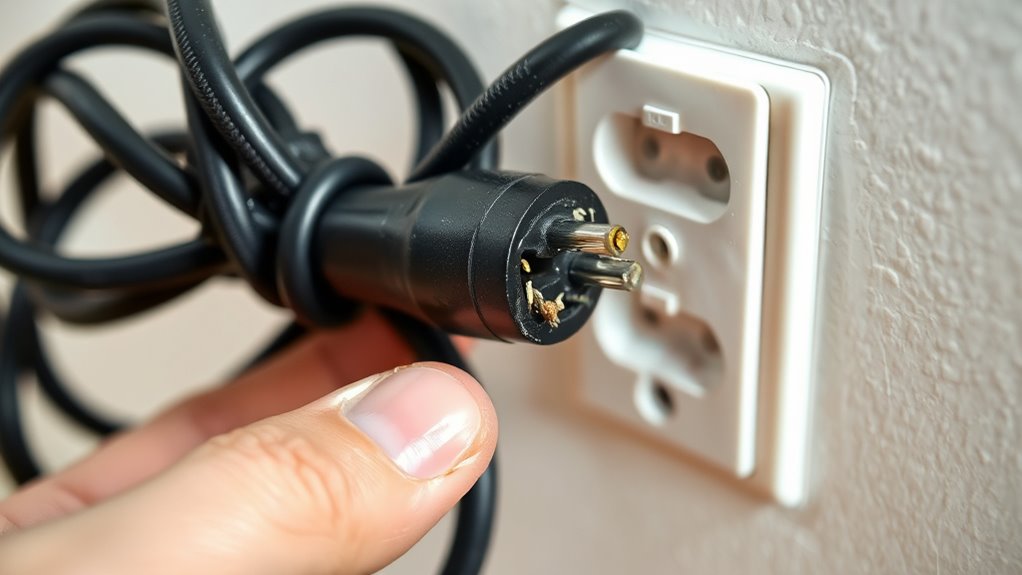
Start by inspecting electrical cords for frays or cuts that could cause shocks or fires. Check outlets to see if they’re loose or damaged, and confirm plugs fit securely. Finally, test whether outlets are grounded properly to prevent electrical hazards. Additionally, ensure there are no silly tantrums or unexpected pet antics near electrical setups, as these can pose safety risks in busy households. Regularly perform safety checks to catch potential issues early and maintain a safe environment. Remember, grounding is essential for preventing electrical shock, so verify that outlets are properly grounded to enhance safety.
Inspect for Frays or Cuts
Inspecting your electrical cords and outlets for frays or cuts is a crucial step in maintaining home safety. Damaged cords can pose serious wiring hazards, increasing the risk of shocks or fires. To guarantee cord safety, check your cords regularly for visible damage. Here are three key tips:
- Look for exposed wires or frayed insulation on the cords’ exterior.
- Feel for any rough or brittle spots that could indicate weakening.
- Inspect outlets for scorch marks or signs of overheating.
- Be aware of potential electrical hazards caused by compromised wiring or damaged components. Regularly monitoring for signs of wear can also help prevent electric shocks and ensure your home’s electrical system remains safe and reliable.
If you notice any damage, replace or repair the cords immediately. Damaged cords compromise wiring integrity and can lead to electrical accidents. Staying vigilant about cord safety helps prevent potential hazards and keeps your home safe for everyone.
Check for Loose Outlets
Have you checked whether your outlets are securely attached to the wall? Loose outlets can pose electrical hazards, so it’s important to verify they’re firmly in place. Remove outlet covers and inspect the outlet itself for any wobbling or looseness. Tighten the outlet screws if needed, but avoid overtightening, which can damage wiring safety. While doing this, look for signs of damage like scorch marks or frayed wiring around the outlet. Installing outlet covers can prevent accidental contact with live parts and keep children safe. Regularly checking outlets for looseness and damage helps prevent electrical shocks or fires. If you notice any issues beyond simple tightening, consider consulting a professional electrician to ensure all wiring is safe and up to code.
Test Grounded or Ungrounded
After confirming your outlets are securely attached and free from visible damage, it’s important to examine the electrical cords and outlets for any signs of wear or harm. Check whether outlets are grounded or ungrounded, as this impacts electrical safety. Ungrounded outlets lack a grounding system, increasing the risk of shocks and equipment damage. Use a tester to determine if outlets are properly grounded; an incorrect grounding system can compromise safety. Here are key points to consider:
- Look for frayed or exposed wires on cords, which can cause shocks.
- Test outlets with a grounding tester to confirm proper grounding.
- Avoid using damaged cords or outlets until repairs are made to ensure electrical safety.
- Regularly inspect electrical components to prevent hazards associated with faulty wiring and maintain a safe home environment.
Clear Pathways and Remove Clutter to Prevent Trips

To prevent trips and falls in your home, it’s essential to keep pathways clear of clutter and obstacles. Creating clutter free zones ensures that walkways stay unobstructed, reducing the risk of accidents. Regularly inspect hallways, staircases, and entryways, removing any objects that could cause someone to trip. Keep trash, shoes, toys, and other items off the floor, especially in high-traffic areas. Use storage solutions to organize belongings and maintain clear walkways. A tidy environment not only enhances safety but also makes it easier to move around comfortably. Additionally, establishing simple routines for daily tidying helps maintain these safety measures consistently. By maintaining clear pathways and eliminating clutter, you create a safer, more accessible home for everyone, reducing the likelihood of falls and injuries.
Test Window and Door Locks for Security
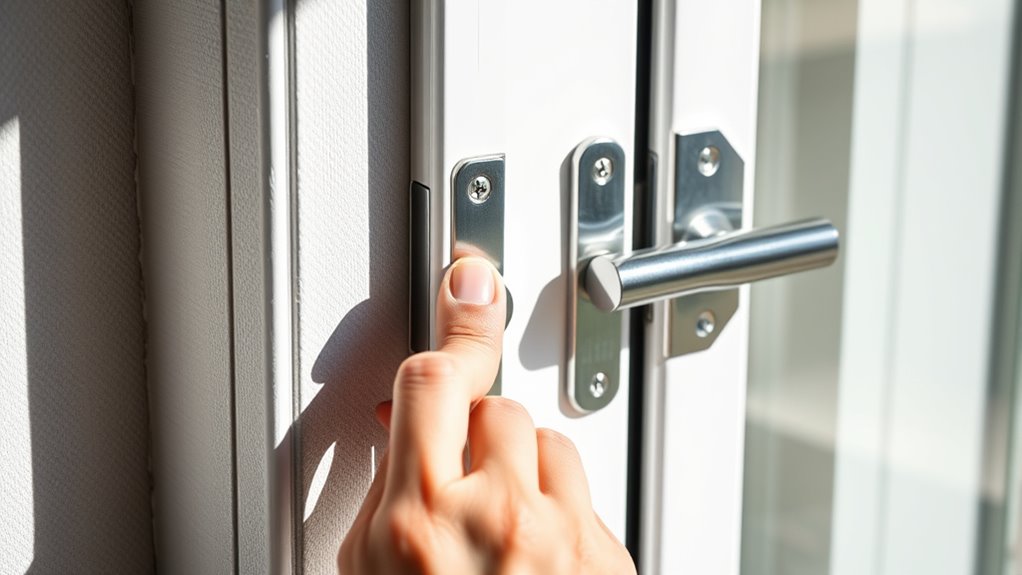
Regularly testing your window and door locks is vital to guarantee your home’s security. You want to ensure that each lock functions properly and provides effective window security and door reinforcement. To do this, follow these simple steps:
- Check lock operation – Lock and unlock each window and door to confirm smooth, secure action.
- Inspect for wear – Look for rust, corrosion, or damage that could weaken the lock’s integrity.
- Test security features – Engage secondary locks, deadbolts, or reinforcement bars to strengthen door security.
Performing these checks regularly helps you catch issues early, keeping your home safe from intruders. Reinforcing weak locks and maintaining window security are simple yet powerful ways to protect your home effectively.
Review and Update Emergency Exit Plans

Reviewing and updating your emergency exit plans guarantees you’re prepared for unexpected situations. Start by checking your evacuation routes to verify they’re clear and accessible from every room. Walk through your home and identify the safest paths to exits, considering any recent changes or obstacles. Confirm that everyone in your household knows these routes and can navigate them quickly. Next, review your designated assembly points outside your home. Make sure they’re visible, safe, and easy to reach from all exits. Communicate any updates to your family or roommates, so everyone stays informed. Regularly practicing your plan helps reinforce it, reducing panic during emergencies. Keeping your exit strategies current is a simple but crucial step to protect your loved ones and ensure swift action when it’s needed most.
Assess Stairways and Handrails for Stability
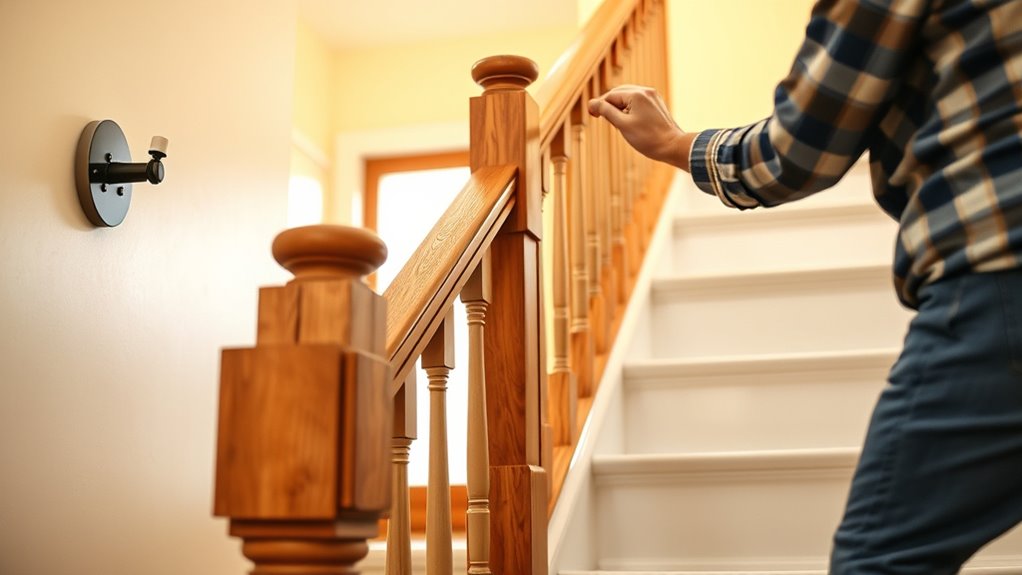
Since stairways are frequently used and can pose safety risks if unstable, conducting regular assessments of their condition is essential. Check for issues like loose handrails, wobbly stair tread security, and uneven steps. To improve safety, consider these steps:
Regularly inspect stairways for loose handrails, wobbly steps, and uneven surfaces to ensure safety at home.
- Test handrail stability by applying firm pressure; it should not wobble or shift.
- Examine each stair tread to ensure it’s secure and free from cracks or damage.
- Look for uneven or loose steps that could cause tripping or falling hazards.
Address any problems immediately to prevent accidents. Ensuring handrail stability and stair tread security keeps everyone safe as they navigate your home. Regular checks are simple but imperative for maintaining a safe environment.
Ensure Proper Storage of Hazardous Materials
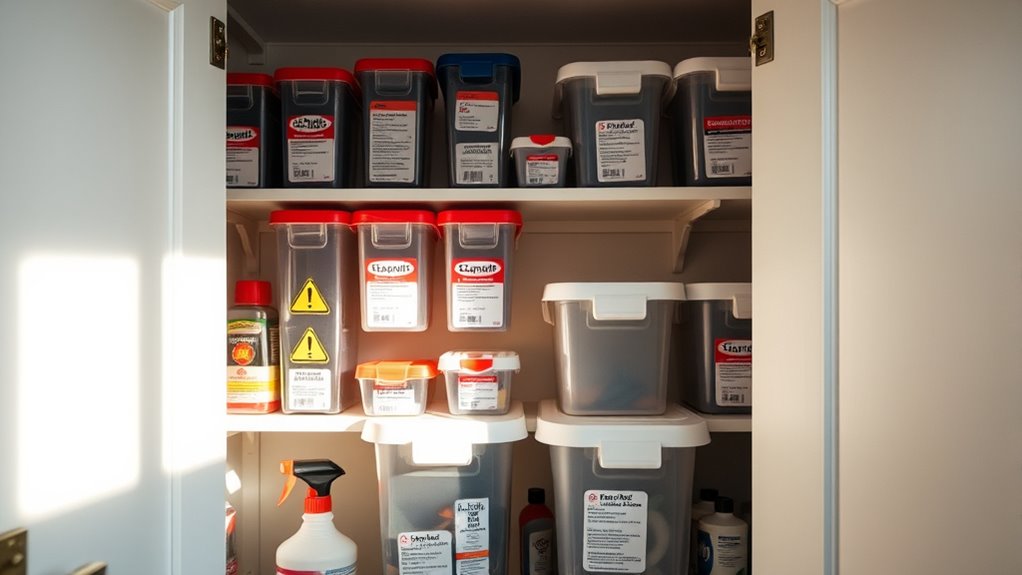
Properly storing hazardous materials is essential to keeping your home safe. Start with proper chemical storage by using sturdy, clearly labeled containers. Follow labeling practices carefully—labels should include contents, handling instructions, and expiration dates. Store chemicals in a designated, well-ventilated area away from children and pets. Keep incompatible substances separate to prevent dangerous reactions. Use shelves or cabinets that can contain spills and are resistant to corrosion. Regularly check storage areas for leaks, damage, or expired products, and dispose of hazardous materials responsibly. By maintaining proper chemical storage and clear labeling, you reduce the risk of accidents and ensure everyone in your home stays safe. Staying organized and vigilant makes managing hazardous materials much easier and safer.
Examine Structural Elements for Signs of Damage
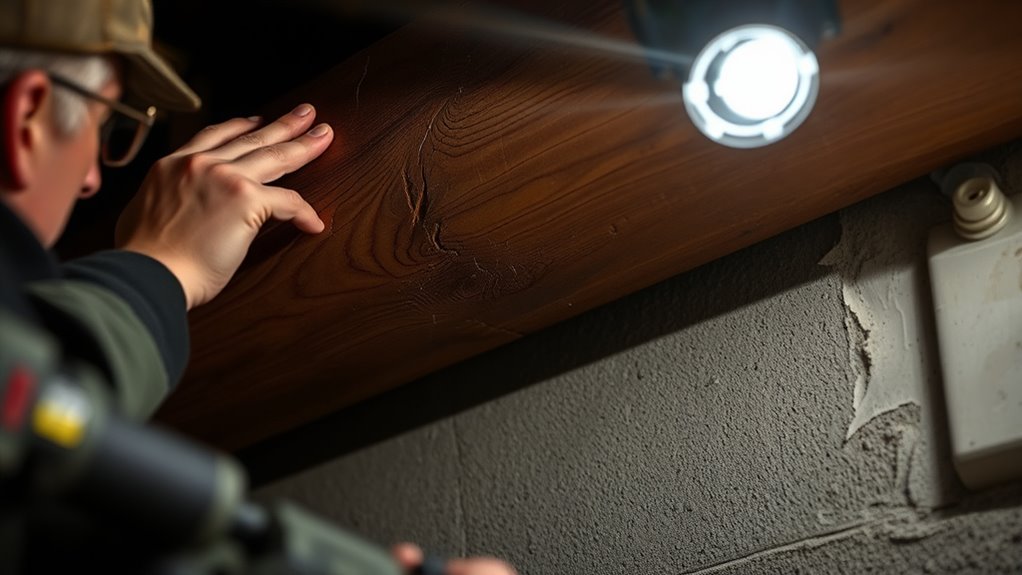
Regularly inspecting the structural elements of your home is essential to catch potential damage early. Look for cracks, sagging, or warping in load-bearing walls, which can threaten foundation integrity. Check the foundation for signs of shifting, such as large cracks or uneven floors. Don’t forget to assess the roof condition—missing shingles, water stains, or sagging areas may indicate underlying issues. To stay proactive:
- Examine walls and ceilings for cracks or bulges.
- Inspect the foundation for cracks or shifting.
- Review the roof for missing shingles or leaks.
Addressing these signs promptly helps preserve your home’s stability and safety. Regular checks ensure your home remains secure, preventing costly repairs and safeguarding your loved ones.
Frequently Asked Questions
How Often Should I Perform These Safety Checks?
You should perform these safety checks at least once every three to six months. Regularly review your fire escape plans and guarantee everyone knows the routes. Update your emergency contacts and check smoke detectors to confirm they work properly. Keep an eye out for hazards like loose wires or blocked exits. Doing these checks frequently helps you stay prepared, making your home safer for you and your loved ones.
What Should I Do if I Find a Safety Hazard?
If you find a safety hazard, act quickly to fix it. For fire extinguisher maintenance, guarantee it’s fully charged and accessible, replacing or recharging if needed. Check electrical outlet safety by unplugging damaged cords and replacing faulty outlets. If necessary, turn off power to prevent accidents. Don’t hesitate to call a professional if the hazard is serious or beyond your skill level, guaranteeing your home stays safe.
Are There Specific Tools Needed for These Inspections?
Ever wonder if your home is truly safe? For DIY safety inspections, you’ll need simple tools like a flashlight, a screwdriver, a ladder, and a smoke detector tester. These inspection tools help you spot hazards quickly and accurately. No fancy equipment required—just a keen eye and these essentials to keep your home secure. With the right tools, you become your home’s best safety advocate, catching issues before they become emergencies.
How Can I Involve Children in Home Safety?
You can involve children in home safety by teaching them about child safety rules and encouraging family involvement. Make safety checks fun by turning them into games, like identifying hazards or practicing fire drills together. Explain why certain safety measures matter, and assign simple tasks like picking up toys or checking smoke alarms. This not only keeps your home safe but also helps children develop safety awareness and responsibility.
When Is It Necessary to Hire a Professional for Repairs?
You should hire a professional when it comes to fire safety or electrical wiring concerns. If you notice flickering lights, outlets that don’t work, or burning smells, it’s time to call an expert. Professionals guarantee your home’s wiring meets safety standards and reduces fire risks. Don’t risk injury or damage—trust trained technicians to handle complex repairs safely and effectively, keeping your household safe and secure.
Conclusion
By taking these simple safety checks, you’re making your home a safer place for everyone. Regularly inspecting detectors, clearing clutter, and reviewing emergency plans can prevent accidents before they happen. Isn’t your peace of mind worth a few minutes of effort? Staying proactive keeps you and your loved ones protected, so don’t wait—start these quick safety checks today and enjoy the confidence that comes with a safer home.