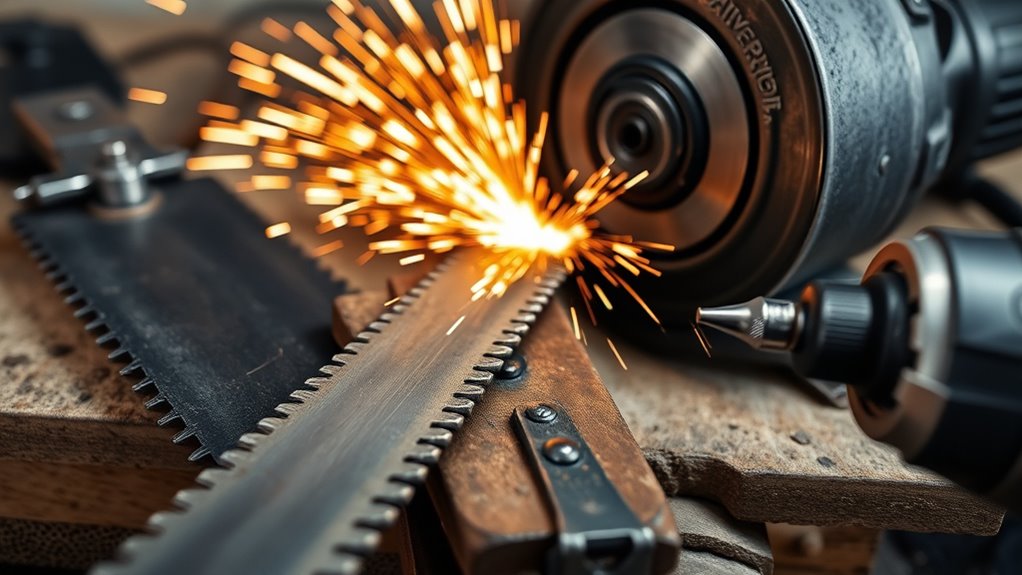

To cut metal at home, choose your tool based on your project’s needs. Use a hacksaw for small, precise cuts in thin metal—it’s simple and beginner-friendly. An angle grinder offers more power for thicker or tougher metals but requires careful handling and safety precautions. Dremels work well for detailed, intricate cuts in tight spaces but are slower. Keep safety in mind, and exploring more will help you pick the best tool for your project.
Key Takeaways
- Use a hacksaw for precise, small cuts on thin metal sheets or pipes with steady, manual effort.
- Choose an angle grinder for faster, more powerful cutting of thicker or tougher metals.
- Opt for a Dremel for detailed, intricate cuts in tight spaces, but it is slower than the other tools.
- Always wear protective gear and ensure tools are well-maintained for safe metal cutting.
- Select the appropriate tool based on metal thickness, cut complexity, and project precision requirements.
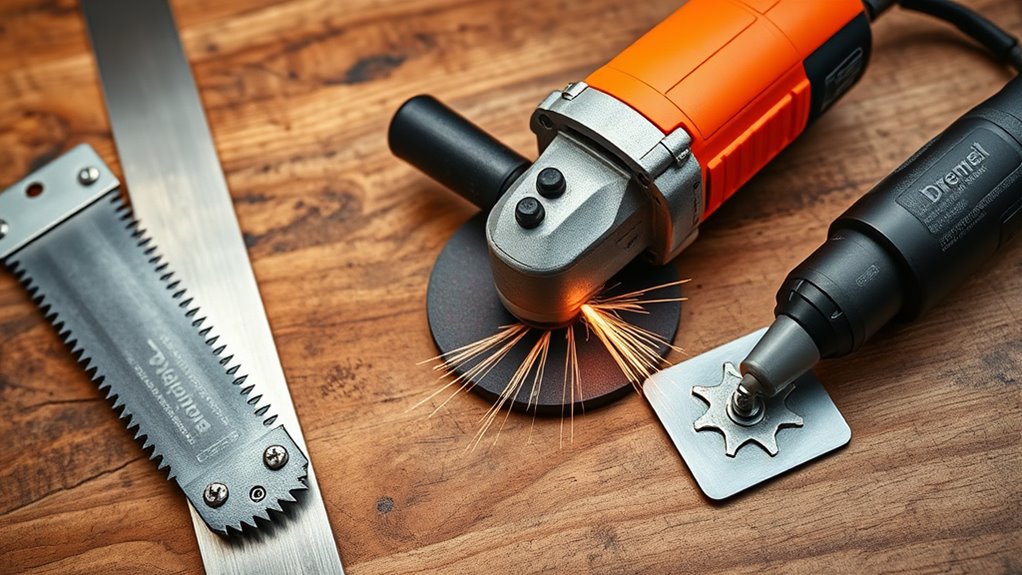
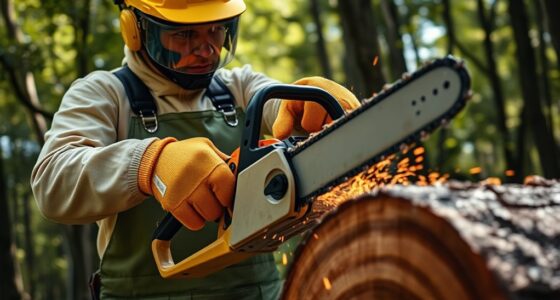
Ever wondered how to cut metal efficiently at home without professional tools? If so, understanding the right techniques and safety precautions is essential. Using tools like a hacksaw, angle grinder, or Dremel can be effective, but each requires careful handling to guarantee your safety and the longevity of your equipment. Before you start, always prioritize safety precautions—wear protective gear such as goggles, gloves, and a dust mask. Metal cutting generates sparks, sharp shards, and dust, so safeguarding your eyes and lungs is vital. Additionally, check your tools regularly for wear and tear, and perform proper tool maintenance. Keeping blades sharp and components in good condition ensures cleaner cuts and reduces the risk of accidents. For long-term safety and reliability, incorporating a transfer switch checklist into your planning can help manage power sources safely during home projects. A hacksaw is a classic choice for small, precise cuts in thin metal sheets or pipes. Its simplicity makes it beginner-friendly, but it demands patience and steady effort. To get the best results, secure your metal piece firmly in a clamp or vice to prevent slipping. Use smooth, even strokes, and let the saw do the work—don’t press too hard, as that can cause the blade to bend or break. Regularly inspect the hacksaw blade for dullness or damage, replacing it when necessary to maintain cutting efficiency. Proper tool maintenance not only extends the life of your hacksaw but also guarantees cleaner, safer cuts. An angle grinder offers more power and speed, ideal for cutting thicker or tougher metals. However, it can be dangerous if not handled properly. Always hold the grinder with both hands, keep a firm grip, and be mindful of sparks and debris. Use a cutting disc suitable for metal, and ensure it’s properly mounted before turning on the tool. Make steady, controlled passes through the metal, avoiding excessive pressure that can cause kickback or disc breakage. After each use, clean your angle grinder and inspect the disc for cracks or damage, replacing it as needed. Proper tool maintenance helps prevent accidents and keeps your grinder performing at its best. Lastly, a Dremel tool is perfect for detailed or intricate cuts, especially in tight spaces. Its small size allows for precision, but it’s slower than larger tools. Use the right abrasive bits designed for metal, and go slowly to avoid overheating or damaging the bit. Always grip the Dremel firmly and use steady movements. Because Dremels generate a lot of heat, take breaks to let the bit cool down, preventing premature wear. Regularly check and replace worn bits or burrs to maintain cutting quality. Proper tool maintenance and adherence to safety precautions will help you achieve precise cuts without compromising your safety or your tools’ lifespan.
Frequently Asked Questions
What Safety Gear Should I Wear When Cutting Metal at Home?
When cutting metal at home, you should wear proper personal protective equipment to stay safe. Always use safety goggles or a face shield to protect your eyes from sparks and metal shards. Wear durable gloves to guard your hands, and consider a dust mask or respirator to avoid inhaling particles. Follow safety precautions diligently, including hearing protection if you’re using loud tools, ensuring you stay safe during your project.
Can I Cut All Types of Metal With a Hacksaw, Grinder, or Dremel?
You can cut most metals with a hacksaw, grinder, or Dremel, but your choice depends on metal thickness and tool compatibility. For thin metals, a Dremel works well, while thicker metals may require an angle grinder for efficiency. A hacksaw is suitable for light-duty tasks. Always match the tool to the specific metal type and thickness to guarantee safe, precise cuts without damaging your equipment.
What Is the Ideal Blade or Disc for Each Tool?
For each tool, select blades or discs optimized for metal cutting. Use high-quality hacksaw blades designed for metals to guarantee durability and clean cuts. Choose a metal-cutting disc with a thin, abrasive surface for your angle grinder, making sure it’s compatible with your grinder’s specifications. For a Dremel, pick a reinforced cutting wheel or a carbide tip attachment suited for precise, small cuts on various metals. Proper blade compatibility and disc selection lead to better results.
How Do I Ensure Straight Cuts When Using These Tools?
To guarantee straight cuts, you should use measuring tools like rulers or squares to mark your cut lines precisely. Clamp a cutting guide or straightedge along the marked line to keep your tool steady. For added accuracy with a hacksaw, angle grinder, or Dremel, follow the guide closely and cut slowly, maintaining consistent pressure. Double-check your measurements before starting to prevent crooked cuts and achieve a clean, straight finish.
Are There Any Environmental Concerns When Cutting Metal at Home?
When cutting metal at home, you should be aware of environmental concerns like metal shavings and air quality. Always wear a mask and eye protection to prevent inhaling dust or shavings. Use a vacuum or wet methods to control metal debris and keep your workspace clean. Proper disposal of shavings prevents environmental contamination, and working in a well-ventilated area helps maintain good air quality during cutting.
Conclusion
Just like choosing the right tool can turn a rough cut into a smooth finish, picking between a hacksaw, angle grinder, or Dremel depends on your project. I once tried cutting a stubborn metal pipe with a dull hacksaw—frustrating and time-consuming. But with the right tool, it’s like slicing through butter. Remember, the right choice makes all the difference, turning a formidable task into a satisfying accomplishment. So, pick wisely and cut confidently!