
A drill press is perfect when you need precise, consistent holes in materials like metal or wood. You should use one when accuracy, stability, and control are essential, especially for detailed projects or large workloads. It reduces errors and improves safety compared to handheld drills. Proper setup and technique are key for the best results. If you want to learn more about when and why to use a drill press, there’s plenty more to discover ahead.
Key Takeaways
- Drill presses provide precise, straight holes, ideal for projects requiring high accuracy in metalworking.
- Use a drill press when working with tough materials like steel or aluminum for cleaner, more controlled results.
- They enhance safety by stabilizing the workpiece and reducing the risk of slips compared to handheld drills.
- Drill presses save time and effort, especially for repetitive drilling tasks or large-scale projects.
- Proper use involves securing workpieces, selecting appropriate bits, and adjusting speed for material and bit size.
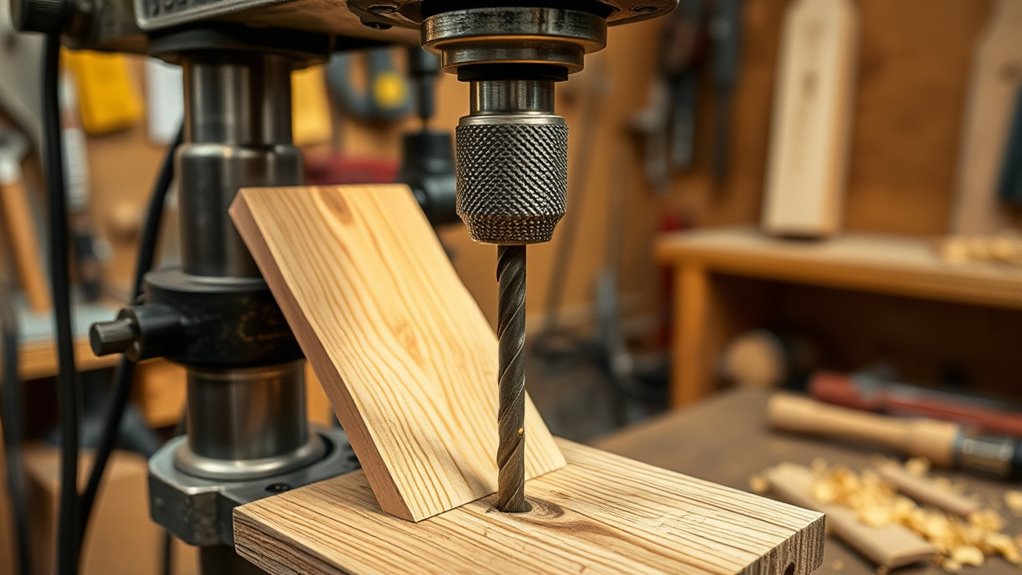
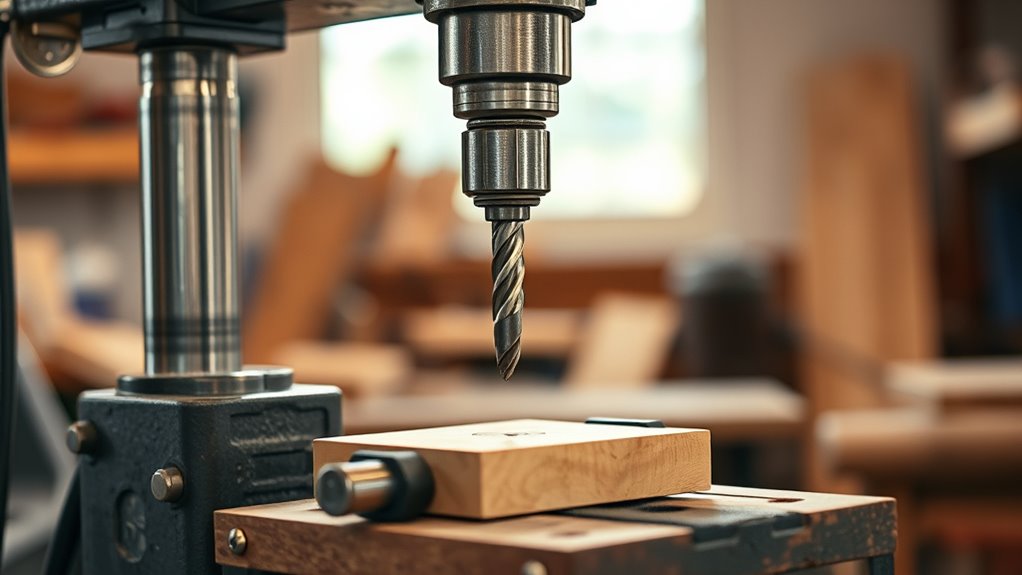
A drill press is a versatile tool that helps you make accurate, straight holes in various materials. When working with metals, it becomes even more essential because precision and safety are critical. Using a drill press for metalworking techniques allows you to achieve cleaner, more precise holes than handheld drills. It provides stability, control, and consistency, which are vital when working with tougher materials like steel or aluminum. Whether you’re creating parts for a project or repairing equipment, a drill press helps you maintain accuracy and saves time. Additionally, understanding metalworking techniques ensures that you select the right speed, drill bits, and lubrication for optimal results.
A drill press ensures precision, safety, and efficiency when drilling into metals for various projects.
Before you start drilling into metal, it’s important to understand the safety precautions involved. Metalworking can be hazardous if you’re not careful, so always wear safety glasses to shield your eyes from metal shavings or sparks. Keep your work area clean and free of clutter to prevent accidents. Make sure the drill bit is properly secured in the chuck and that it’s appropriate for metalwork — high-speed steel bits are usually the best choice. Also, ensure that the workpiece is firmly clamped to prevent movement during drilling, which could cause slips or uneven holes.
When drilling into metal, adjust the drill press’s speed according to the material’s thickness and the bit size. Slower speeds are typically better for metals because they reduce heat buildup and prolong the life of your drill bits. Use cutting oil or lubricant to keep the bit cool and to improve the quality of the hole. This not only helps prevent the bit from overheating but also reduces the risk of metal shavings getting lodged in the drill press or causing jams.
Frequently Asked Questions
Can a Drill Press Be Used for Cutting Non-Metal Materials?
Yes, you can use a drill press for cutting non-metal materials, but you need to contemplate material compatibility and proper cutting techniques. Use the right drill bits designed for wood, plastic, or other softer materials to prevent damage. Adjust the speed appropriately, apply steady pressure, and use cutting lubricants if necessary. This ensures clean cuts and preserves your tools, making your project efficient and safe.
How Do I Maintain and Clean My Drill Press Properly?
To keep your drill press in top shape, regularly clean and maintain it. Use dust removal methods like compressed air or a brush to clear debris from the table and motor vents. Apply lubrication techniques such as oiling the spindle and moving parts to prevent rust and guarantee smooth operation. Check and tighten all bolts periodically, and keep the work area clean to prolong your drill press’s lifespan and maintain safety.
What Safety Gear Should I Wear When Operating a Drill Press?
When operating a drill press, you should wear protective eyewear to shield your eyes from flying debris and dust. Hearing protection is also essential to safeguard your ears from the loud noise generated during drilling. Always wear snug-fitting clothes and avoid loose accessories that could get caught. By prioritizing safety gear like safety glasses and ear protectors, you diminish the risk of injury and ensure a safer, more comfortable working experience.
Are There Portable or Cordless Drill Presses Available?
Yes, you can find portable options and cordless models of drill presses. These are perfect if you need flexibility and mobility around your workspace or job site. Cordless drill presses eliminate the need for cords, making them easy to transport and set up anywhere. Portable options are lightweight and compact, allowing you to perform precise drilling tasks without being tethered to a power outlet.
How Do I Choose the Right Drill Bit for My Project?
To choose the right drill bit, consider your project’s material and the drill bit types suited for it. For wood, use wood bits; for metal, opt for high-speed steel or cobalt bits; for masonry, choose carbide-tipped bits. Match the bit’s size to your desired hole, and guarantee it’s compatible with your drill press. This ensures efficient, clean drilling and prevents damage to your materials.
Conclusion
A drill press isn’t just a tool; it’s the superhero of your workshop, turning your projects from average to awe-inspiring in seconds. With its unmatched precision and power, you’ll wonder how you ever worked without it. Whether you’re crafting tiny jewelry or building a massive furniture piece, this beast makes every hole perfect and every cut flawless. Once you see what it can do, you’ll never want to go back to hand-drilling again—trust me, it’s that good.